2026 Roofing Trends Homeowners Should Know Before Storm Season

2026 Roofing Trends Homeowners Should Know Before Storm Season
Reimagine 2026 Roofing Trends Homeowners Should Know Before Storm Season
Storm season doesn’t care if your roof is “only 10 years old.” One bad event—hail, hurricane bands, monsoon downpours, straight-line winds—can turn small weaknesses into expensive repairs fast. The good news? The biggest roofing trends of 2026 aren’t about flashy design upgrades. They’re about resilience, efficiency, smarter installation methods, and systems designed to protect your home when weather becomes unpredictable.
Across Arizona, New Mexico, Utah, Florida, and New Jersey, homeowners are rethinking what a “good roof” really means. It’s no longer just about curb appeal. It’s about performance under pressure.
This comprehensive guide breaks down the most important 2026 roofing trends, what they mean for your home before storm season begins, and how Reimagine Roofing helps homeowners make confident, storm-ready decisions without overspending.
Introduction to Roofing Trends
The roofing industry continues to evolve at a rapid pace, driven by advancements in technology, a growing focus on sustainability, and shifting homeowner preferences. In 2026, your roof is more than just a protective barrier—it’s a key component of your home’s energy efficiency, comfort, and curb appeal. Whether you’re considering a full roof replacement or simply upgrading your roofing materials, staying informed about the latest roofing industry trends is essential for making smart, future-proof decisions.
Today’s top roofing materials are engineered for more than just durability. Homeowners are increasingly seeking out cool roofs that help decrease roof temperature and reduce energy costs, especially in regions with intense sun exposure. Organizations like the Cool Roof Rating Council provide valuable resources to help homeowners compare cool roof options and understand the benefits of energy-efficient roofing materials.
Wind resistance and impact resistance are also top priorities, as extreme weather events become more common. New technologies in the roofing industry are making it easier than ever to select materials and systems that offer superior protection against wind, hail, and other storm-related risks. By staying updated on these trends and leveraging trusted resources, homeowners can make informed decisions that enhance both the performance and longevity of their roofs.
The Headline Trend for 2026: Resilience-First Roofing
The biggest shift in roofing this year is mindset. Homeowners are moving from:
“What looks best?” to “What survives best?”
Resilience-first roofing focuses on building an entire roofing system that addresses the three most common causes of storm damage:
- Wind uplift (shingles lifting or tearing off)
- Water intrusion (leaks from wind-driven rain; leaks can occur if shingles are compromised, but impact-resistant materials help prevent leaks by maintaining roof integrity)
- Impact damage (hail, debris, falling branches; asphalt shingles, especially those rated as Class 4 impact resistant, are engineered to withstand hail and debris, and are tested under UL 2218 standards)
Rather than relying on one “premium” product, 2026 roofing systems emphasize layered protection:
- Reinforced decking attachment
- Sealed roof decks
- Secondary water barriers
- Proper flashing installation
- High-wind rated shingles
- Impact-resistant materials
Impact resistant roofs, such as those using Class 4 asphalt shingles, can help homeowners save on insurance premiums and reduce repair costs over time. Investing in impact-resistant shingles ensures long-term protection and durability.
This systems-based thinking is changing how smart homeowners prepare before storm season.
Trend 1: Class 4 Impact-Resistant Shingles Becoming the Standard in Hail Zones
In hail-prone states, Class 4 shingles are no longer an upgrade — they’re becoming the expectation.
2.1 Impact Resistance Testing
Asphalt shingles are commonly tested for impact resistance under the UL 2218 standard, which involves dropping a steel ball from a height of 20 feet—about half the height used for lower ratings—to simulate hail impact. This rigorous testing ensures that asphalt shingles with a Class 4 rating can withstand severe storm conditions and provide enhanced durability.
2.2 Premium Protection and Cost
Class 4 roofing shingles, often made from advanced asphalt formulations, are a premium product that may cost more than standard shingles but offer superior protection. Homeowners in storm-prone areas increasingly choose these impact-resistant asphalt shingles for their proven performance and potential insurance benefits.
What Class 4 Means
Class 4 is the highest impact-resistance rating under standardized testing methods designed to simulate hail impact. Asphalt shingles that achieve this rating are tested according to UL 2218 standards, where a steel ball is dropped from a height of 20 feet—half the height used for lower class ratings—to simulate severe hail impact. This rigorous test ensures that Class 4 asphalt shingles are engineered for superior durability and storm resistance.
Why 2026 Is Different
Repeated storm seasons have changed homeowner behavior. Instead of replacing standard shingles every time hail hits, many homeowners are choosing impact-resistant materials, such as asphalt shingles with a UL 2218 Class 4 impact rating, to reduce repeat damage.
Benefits may include:
- Reduced likelihood of cracking from moderate hail
- Better resistance to granule loss
- Potential insurance premium considerations (varies by carrier)
- Increased resale appeal in hail-prone markets
Class 4 asphalt shingles are considered a premium product, often costing more than standard shingles, but they provide better protection and long-term value.
However, the most important takeaway is this:
A Class 4 shingle is only part of the solution.
If the underlayment, decking attachment, flashing, or ventilation system is weak, impact-resistant shingles alone won’t prevent storm damage.
Trend 2: Sealed Roof Decks and Secondary Water Barriers
In 2026, more homeowners are focusing on what’s under the shingles.
When high winds remove shingles, water intrusion becomes the real threat. A sealed roof deck acts as a secondary barrier that helps prevent rain from pouring directly into your attic and living space.
This approach can:
- Reduce interior water damage
- Protect insulation and framing
- Minimize mold risk
- Buy time during severe weather events
Storm damage often escalates not because shingles fail — but because water enters once shingles are compromised.
A properly sealed deck combined with quality underlayment is one of the most important upgrades homeowners can consider before storm season.
Trend 3: Synthetic Underlayment Replacing Traditional Felt
Underlayment is one of the most overlooked components in roofing.
Traditional felt underlayment has been used for decades, but synthetic underlayments are becoming increasingly popular in 2026 due to improved durability and moisture resistance.
Homeowners are choosing synthetic options because they typically offer:
- Better tear resistance
- More consistent performance in heavy rain
- Increased durability during installation
- Improved storm resilience
Building owners also value synthetic underlayment for its durability and weather resistance, which help protect their investment.
When storms hit, underlayment becomes your home’s backup defense system.
If you’re investing in a new roof before storm season, this is a detail worth asking about.
Trend 4: Cool Roof Systems for Hotter Summers
Across sun-heavy states like Arizona, New Mexico, Utah, and Florida, cool roof systems are seeing increased demand.
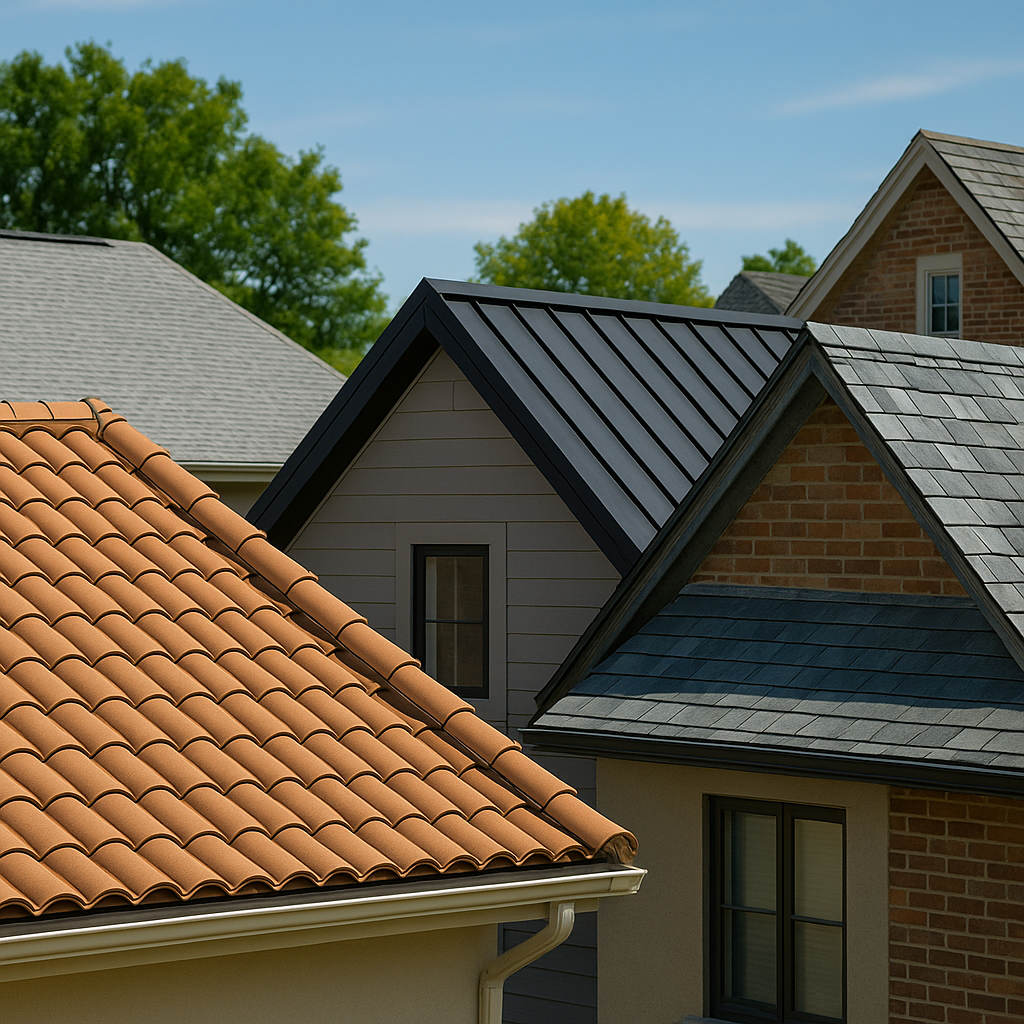
Cool roofs are designed to reflect more sunlight and absorb less heat than traditional roofing materials. Reflective coatings applied to the roof covering can significantly reduce heat absorption, which helps lower cooling demand and energy costs. The choice of roof covering and roof types—such as asphalt shingles, wood shingles and shakes, polymer shingles, clay and concrete tiles, slate tiles, and metal shingles or tiles—affects how much sunlight the roof reflects and how cool it stays. White roofing products are especially effective, reflecting about 60–90% of sunlight and staying coolest in the sun, which further reduces heat absorption. Additionally, cool roofs can help reduce the urban heat island effect, especially in densely populated areas, leading to lower overall temperatures.
Why does that matter?
Under intense sun exposure, traditional roofing materials can reach extremely high surface temperatures. Reflective systems help:
- Reduce attic heat buildup
- Improve indoor comfort
- Lower cooling load strain
- Potentially reduce energy consumption
- Extend material life by reducing thermal stress
In 2026, heat resilience is becoming just as important as storm resilience.
For homeowners in mixed climates like New Jersey, cool roofing can also help during increasingly hot summer seasons.
Trend 5: Solar-Ready Roofing Systems
Solar adoption continues to rise, but the smarter approach in 2026 is planning ahead.
Homeowners are asking:
“If I’m adding solar in 2–5 years, is my roof ready?”
A solar-ready roof includes:
- Structural integrity confirmation
- Reinforced decking
- Proper flashing planning
- Ventilation balance
- Roof lifespan coordination with solar panel lifespan
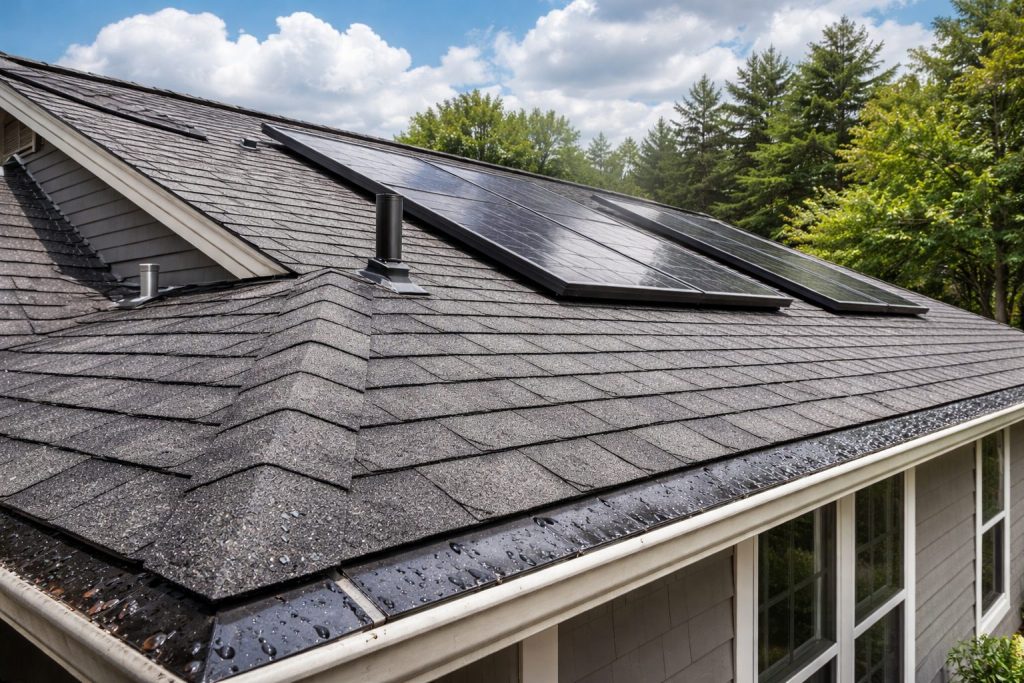
Solar roofing systems are advancing beyond basic panel installations to become more mainstream, with options like solar shingles offering an innovative, aesthetically pleasing, and increasingly cost-effective way to integrate solar energy directly into residential roofing.
Installing solar on a roof nearing the end of its life can create unnecessary costs later. Planning roof replacement strategically avoids double expenses.
Trend 6: Technology-Driven Roof Inspections
Homeowners in 2026 expect transparency.
Roof inspections are increasingly supported by:
- Aerial measurement tools
- Detailed photo documentation
- Visual mapping of problem areas
- Clear, written damage assessments
- Faster quoting turnaround
Roofing contractors are now using AI-powered inspection tools and smart roofing systems equipped with sensors that monitor moisture levels, temperature changes, and structural integrity. Technology reduces guesswork and improves accuracy, while also giving homeowners and property owners visual proof of existing conditions before storm season arrives. Property owners benefit from smart roofs that allow early leak detection, energy efficiency tracking, and maintenance alerts via connected apps. Technology is revolutionizing roof maintenance, enabling predictive maintenance and data-driven decisions.
This is especially valuable for documenting:
- Hail damage
- Granule loss
- Flashing deterioration
- Soft decking spots
- Ventilation problems
Clear documentation can be critical if storm damage occurs later.
Trend 7: High-Wind Installation Details Matter More Than Brand Names
Premium shingles don’t protect your home if they’re installed incorrectly.
In 2026, attention is shifting toward installation quality and high-wind detailing:
- Proper nail placement within manufacturer zones
- Enhanced fastening patterns in high-wind regions
- Secure starter strip installation
- Reinforced ridge caps
- Strong drip edge attachment
- Correct valley installation methods
Wind uplift is one of the most common causes of roof damage during storm season. Installation quality directly affects whether shingles stay in place when winds intensify.
The details matter more than marketing labels.
Trend 8: Ventilation and Insulation Coordination
Storm season isn’t the only stress test for your roof.
Improper ventilation can:
- Shorten shingle lifespan
- Increase attic temperatures
- Raise cooling costs
- Create moisture buildup
- Contribute to mold growth
Humid climates like Florida, ventilation balance is critical. In high-heat climates like Arizona and New Mexico, it affects thermal performance. Colder climates like New Jersey, it impacts ice dam risk.
Roofing is treated as a system that includes:
- Intake ventilation
- Exhaust ventilation
- Insulation performance
- Air sealing
Balanced airflow improves durability year-round.
Trend 9: Sustainability Through Longevity
Sustainability in roofing is evolving.
Instead of focusing solely on recycled materials, homeowners are prioritizing:
- Longer-lasting roofing systems that extend the service life of the existing roof
- Fewer replacement cycles
- Reduced storm repair frequency
- Energy efficiency improvements
- Reduced landfill waste
Extending the service life of an existing roof through repairing and restoring a roof is a key sustainability strategy that significantly reduces landfill waste. Homeowners and property owners are increasingly choosing sustainable roofing materials, such as recycled metal roofing, reclaimed clay tiles, and composite shingles made from sustainable sources. Composite shingles are gaining popularity due to their durability, sustainability, weather resistance, and ability to mimic the appearance of natural materials like wood and slate. Green roofs, which feature vegetation layers that absorb rainwater and improve insulation, are also rising in demand, especially in urban areas. Sustainability is now a major deciding factor for property owners and builders.
A durable roof that survives multiple storm seasons without repeated replacement is often the most sustainable choice.
Longevity equals reduced environmental impact.
Trend 10: Insurance and Resale Considerations
Insurance realities are influencing roofing decisions in 2026.
Homeowners are considering:
- Impact-resistant material options
- Documented resilience upgrades
- Enhanced water barriers
- Wind-rated systems
- Inspection documentation for claims support
Many modern roofing products are engineered to meet or exceed building codes for wind resistance and hail impact, which can influence insurance premiums and resale value.
While insurance benefits vary by provider and state, resilience improvements may influence underwriting, claim outcomes, and buyer confidence.
For homeowners planning to sell in the next 5–10 years, a storm-ready roof can be a major value driver.
Low Sloped Roofing Considerations
Low sloped roofs present unique challenges, especially in areas prone to high winds, heavy rainfall, or severe weather conditions. Unlike steep-sloped roofs, low sloped systems are more susceptible to water pooling and wind-driven rain, making material selection and installation quality even more critical.
Homeowners with low sloped roofs should prioritize roofing materials that offer exceptional wind resistance and water tightness. Metal panels are a popular choice for their durability and ability to withstand high winds, while single-ply membranes and built-up roofing systems provide reliable protection against leaks and moisture intrusion. As demand for low sloped roofing solutions grows, manufacturers are introducing innovative systems designed to enhance performance and longevity in these challenging environments.
Regular maintenance and professional inspections are essential for low sloped roofs, helping to identify and address potential issues before they escalate. By choosing the right materials and staying proactive with upkeep, homeowners can ensure their low sloped roofs remain resilient and effective, even in the face of extreme weather.
What to Do Before Storm Season Begins
Even if you don’t need a full replacement, preparation matters. Before storm season, it’s recommended that homeowners work with a trusted roofing contractor to ensure a thorough inspection and proper repairs are completed.
Step 1: Schedule a Professional Roof Inspection
Especially if:
- You’ve had hail or wind in the past 24 months
- Your roof is 8–15 years old
- You see missing shingles
- You notice granules in gutters
- You have minor ceiling stains
Early detection prevents escalation.
Step 2: Address Minor Issues Immediately
Small repairs now prevent large claims later.
Step 3: Upgrade Strategically
If replacing soon, prioritize:
- Impact-resistant shingles
- Sealed roof deck systems
- Synthetic underlayment
- High-wind detailing
- Proper ventilation balance
These upgrades are offering homeowners improved performance, aesthetics, and energy efficiency, making them smart choices for anyone looking to enhance their roof in 2026.
Step 4: Document Roof Condition
Photo documentation before storm season can be critical if damage occurs later.
Regional Considerations for Reimagine Roofing Service Areas
Arizona & New Mexico
- Intense UV exposure
- Monsoon winds
- Extreme temperature swings
- Cool roof and ventilation priority
- Tiles are especially popular in Arizona and New Mexico for their durability, weather resistance, and suitability for hot, dry climates
Utah
- Snow load + wind exposure
- Mixed temperature swings
- Ice dam prevention planning
Florida
- Hurricane-force winds
- Wind-driven rain
- High humidity
- Sealed deck and wind detailing critical
- Increasing selection of metal roofing in Florida for its durability, attractive appearance, and long-term maintenance control in hurricane-prone environments
New Jersey
- Nor’easters
- Ice dams
- Hail events
- Mixed climate ventilation balance
Storm-ready roofing looks different in each region.
Why Reimagine Roofing Focuses on Systems, Not Sales
Trends are helpful — but only when applied correctly.
Reimagine Roofing evaluates:
- Local climate risk
- Roof age and condition
- Structural considerations
- Budget goals
- Long-term home plans
- Insurance environment
- The condition and potential of the existing roof to determine if restoration or upgrades can maximize lifespan and functionality before recommending replacement
We recommend what improves durability — not what inflates cost.
Our process includes:
- Detailed inspection
- Clear photo documentation
- Transparent recommendations
- Fast quotes
- Honest assessment of repair vs replacement, with a focus on maximizing the value of your existing roof when possible
Preparation before storm season means fewer surprises later.
Prepare Now Before Storm Season Puts Your Roof to the Test
Storm season is unpredictable. Your preparation doesn’t have to be.
If your roof is aging, has experienced hail or wind damage, or simply hasn’t been inspected recently, now is the time to act.
Reimagine Roofing offers:
- Free professional roof inspections
- Photo-supported condition reports
- Clear recommendations
- Fast, accurate quotes
- Storm-ready system upgrades designed for your region
Don’t wait until shingles are on the ground or water is in your attic.
Schedule your free inspection today and get a fast quote so you can enter storm season confident your roof is built to handle what 2026 brings. Stay updated on the top roofing industry trends to make the best decisions for your home.
Conclusion and Future Outlook
The roofing industry is undergoing a transformation, fueled by new technologies, sustainability goals, and evolving homeowner expectations. Looking ahead, the future of roofing is bright—offering more options than ever for energy efficiency, wind resistance, and long-term durability. From cool roof technology and solar integration to smart roofing systems and advanced materials, homeowners have a wealth of choices to protect and enhance their homes.
As the construction industry continues to prioritize sustainable and durable materials, it’s more important than ever for homeowners to stay informed about the latest roofing industry trends. By considering factors like energy efficiency, wind resistance, and impact resistance, you can make confident, informed decisions that add value and security to your property.
With innovative products and systems now available for both residential and commercial applications, the next generation of roofs will deliver greater comfort, energy savings, and peace of mind. By embracing these advancements and working with knowledgeable roofing contractors, homeowners can look forward to safer, more efficient, and longer-lasting roof systems for years to come.
Popular Posts