5 Reasons Flat Roof Leaks During Monsoon Season

5 Reasons Flat Roof Leaks During Monsoon Season
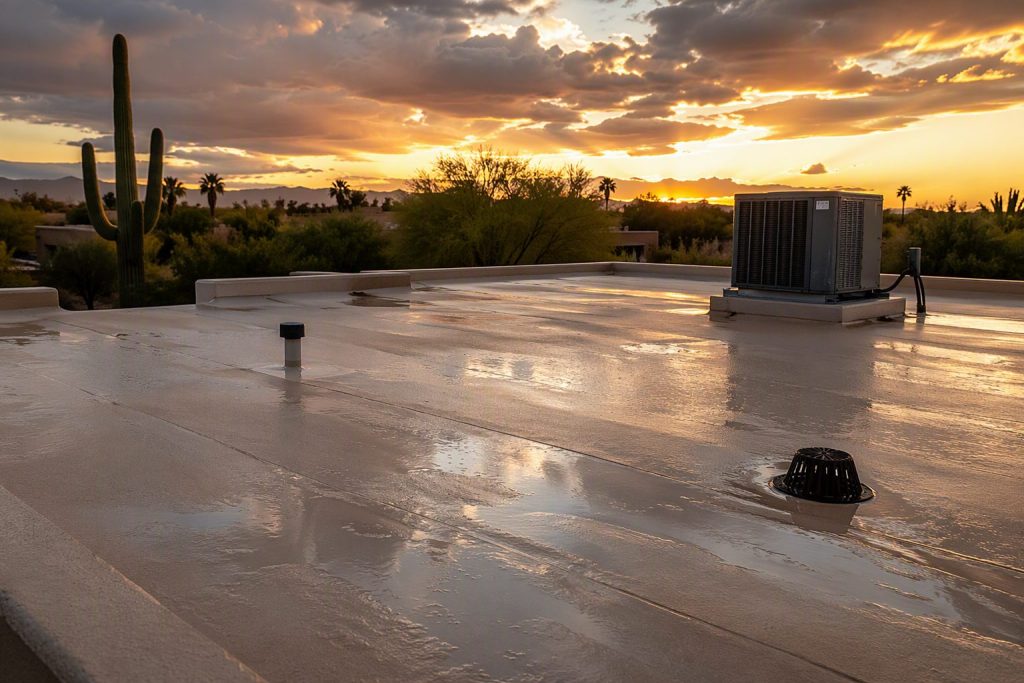
Every year, monsoon season puts flat roofs across Arizona and New Mexico to the test. What begins as a brief afternoon storm can quickly turn into heavy rainfall, high winds, airborne debris, and standing water that exposes weaknesses in a roofing system. For homeowners and commercial property owners, a small roofing issue that went unnoticed during the dry season can suddenly become a major leak when monsoon weather arrives.
Flat roofs are a popular roofing choice throughout the Southwest because they are cost-effective, energy-efficient, and well-suited to modern residential and commercial designs. However, unlike steep-slope roofs that naturally shed water quickly, flat roofs depend heavily on proper drainage, protective coatings, flashing systems, and ongoing maintenance. When any of these components fail, monsoon rains often find their way inside.
At Reimagine Roofing & Construction, we’ve helped countless property owners throughout Phoenix, Arizona, and New Mexico identify and repair roofing issues before they become expensive emergencies. Understanding why flat roofs leak during monsoon season can help you take proactive steps to protect your home, business, and investment.
In this guide, we’ll explore the five most common reasons flat roofs leak during monsoon season and what you can do to prevent costly water damage.
Understanding the Impact of Monsoon Season on Flat Roofs
Monsoon season in Arizona and portions of New Mexico typically brings sudden and intense weather patterns. Unlike gentle rainstorms that occur in other regions of the country, monsoon storms often arrive with little warning and deliver large amounts of rainfall in a short period of time.
The combination of:
- Heavy downpours
- High winds
- Wind-driven rain
- Dust storms
- Flying debris
- Rapid temperature changes
creates a challenging environment for roofing systems.
Even a well-built flat roof can develop vulnerabilities over time. Exposure to intense UV radiation throughout the year gradually deteriorates roofing materials, while repeated expansion and contraction caused by temperature fluctuations can weaken seams, flashing, and protective coatings.
When monsoon storms arrive, those weaknesses become vulnerable entry points for water intrusion.
Unfortunately, many property owners don’t discover roofing issues until they notice:
- Ceiling stains
- Dripping water
- Mold growth
- Interior wall damage
- Swollen drywall
- Damaged insulation
By that point, what could have been a minor maintenance issue may require significant repairs.
Let’s look at the most common causes of monsoon-related flat roof leaks.
1. Clogged Scuppers, Drains, and Gutters
One of the leading causes of flat roof leaks during monsoon season is poor drainage.
Unlike sloped roofs, flat roofs rely on carefully designed drainage systems to move water away from the roof surface. These systems typically include:
- Scuppers
- Internal drains
- Downspouts
- Gutters
- Overflow drains
When functioning correctly, these components channel rainwater safely away from the building.
However, Arizona and New Mexico’s unique climate introduces a challenge that many property owners underestimate: dust and debris accumulation.
How Monsoon Storms Create Drainage Problems
Before monsoon rains arrive, dust storms often sweep through the region. These storms deposit:
- Dirt
- Sand
- Leaves
- Branches
- Roofing granules
- Trash and debris
onto roof surfaces.
When heavy rainfall follows, debris can accumulate around drains and scuppers, creating blockages that prevent water from draining properly and can cause water accumulation on flat roofs.
As a result, water begins accumulating on the roof surface. Poor drain placement away from low points can create persistent ponding issues. Standing water can also attract pests such as mosquitoes.
Even a small obstruction can significantly reduce drainage capacity during a major storm.
Signs of Drainage Problems
Property owners should watch for:
- Water backing up around drains
- Overflowing scuppers
- Standing water after storms
- Debris accumulation near drainage points
- Water pooling in roof corners
Why It Matters
When water cannot escape the roof efficiently, it increases pressure on roofing materials and creates opportunities for water intrusion; standing water can lead to roof leaks and structural damage, not just surface wear.
Over time, trapped moisture can damage:
- Roofing membranes
- Insulation
- Decking
- Structural components
What starts as a clogged drain can eventually lead to extensive interior water damage.
Prevention Tips
- Schedule seasonal roof inspections.
- Remove rooftop debris regularly.
- Inspect drains before monsoon season begins.
- Address drainage concerns immediately.
- Ensure all drainage systems remain unobstructed.
A simple maintenance visit before storm season can prevent thousands of dollars in future repair costs.
2. Cracked Roof Coatings and Surface Deterioration
The Southwest experiences some of the harshest ultraviolet exposure in the United States.
In Phoenix and throughout New Mexico, roofs are subjected to:
- Intense sunlight
- Triple-digit temperatures
- UV radiation
- Sudden temperature fluctuations
day after day, year after year.
These environmental factors gradually break down roofing materials. Reflective roof coatings improve energy efficiency by reflecting sunlight, which can also help reduce cooling costs during extreme heat. Elastomeric coatings expand and contract with temperature changes, but they still wear down over time in desert conditions.
Why Roof Coatings Matter
Most flat roofing systems rely on protective coatings to create a waterproof barrier.
These coatings help:
- Reflect sunlight
- Improve energy efficiency
- Resist moisture intrusion
- Extend roof lifespan
- Protect underlying membranes
Over time, however, coatings naturally age.
As they deteriorate, they may begin to:
- Crack
- Bubble
- Peel
- Blister
- Separate from the roof surface
When monsoon rains arrive, these damaged areas become vulnerable entry points for water.
The Hidden Danger of UV Damage
Many roof problems start long before property owners notice them.
Throughout the hottest months of the year, UV exposure slowly degrades roofing materials.
Tiny cracks that seem insignificant during dry weather can quickly turn into leak pathways during a severe storm.
Because flat roofs are not always visible from the ground, these warning signs often go unnoticed until water enters the building.
Common Warning Signs
Watch for:
- Cracking coatings
- Visible wear patterns
- Surface discoloration
- Peeling material
- Exposed roofing membrane
- Blistering or bubbling
Why Routine Inspections Matter
A professional roofer from experienced roofing contractors can identify coating issues before they cause leaks.
In many cases, a roof coating restoration project can add years to the life of your roof and, depending on the roof’s condition, a 3-course roof coating system can last over 10 years while delaying the need for replacement. Addressing wear early also helps prevent leaks and expensive repairs.
3. Ponding Water and Standing Moisture
Few threats are as damaging to a flat roof as ponding water.
Although flat roofs appear level, they are actually designed with a proper slope of about 1/4 inch per foot to direct water toward drainage points.
When water remains on a roof for 24-48 hours after rainfall, ponding begins to develop, and if it remains for more than 48 hours, it is generally considered a serious warning sign.
Why Ponding Water Occurs
Several issues can contribute to ponding:
1. Blocked Drains
The most common cause.
Water cannot escape if drainage systems are obstructed.
2. Structural Settling
Over time, buildings naturally settle.
This movement can create low spots where water collects.
3. Poor Roof Design
Older roofing systems may not have adequate slope for effective drainage.
4. Aging Roof Systems
As roofing materials age, depressions and uneven surfaces may develop.
Why Ponding Water Is Dangerous
Standing water may seem harmless, but it can create serious roofing problems.
Long-term ponding can:
- Deteriorate roofing membranes
- Increase structural loads
- Accelerate coating failure
- Promote mold growth
- Cause insulation damage
- Lead to recurring leaks
Additionally, Arizona monsoon storms can deliver several rounds of rainfall over consecutive days.
If water is already present on the roof from a prior storm, subsequent rainfall can compound the problem.
Signs of Ponding Water
Property owners should watch for:
- Visible puddles
- Water stains near low areas
- Algae growth
- Dirt rings left behind after evaporation
- Sagging roof sections
The Long-Term Cost of Ignoring Ponding Water
Ignoring ponding water often leads to recurring repairs.
Rather than fixing the root cause, many property owners simply patch leaks as they appear.
A professional roof evaluation can identify drainage deficiencies and provide long-term solutions that reduce future repair costs.
4. Flashing Failures Around Roof Penetrations
Flashing is one of the most overlooked yet critical components of a roofing system.
Roof penetrations create natural weak points where water can enter.
Flashing is specifically designed to seal these vulnerable areas and prevent moisture intrusion.
Common Areas Where Flashing Is Installed
Flashing is typically found around:
- HVAC units
- Roof vents
- Plumbing penetrations
- Skylights
- Parapet walls
- Solar panel attachments
- Chimneys
- Equipment curbs
These areas experience constant movement due to thermal expansion and contraction.
Over time, flashing materials can:
- Crack
- Separate
- Pull away
- Rust
- Warp
- Deteriorate
Why Monsoon Season Exposes Flashing Problems
Monsoon storms often produce wind-driven rain.
Unlike normal rainfall, wind-driven rain can travel horizontally and force moisture into even tiny gaps.
A flashing failure that goes unnoticed during dry weather can quickly become an active leak during a storm.
Warning Signs of Flashing Failure
Look for:
- Water stains near walls
- Leaks around vents
- Rusted flashing materials
- Loose metal components
- Visible gaps around penetrations
Preventative Maintenance
Routine inspections should include a thorough evaluation of all flashing systems.
Many roof leaks originate around penetrations rather than the roofing membrane itself.
Addressing flashing issues early is one of the most cost-effective ways to prevent water intrusion.
5. Small Roofing Problems That Have Been Ignored
Perhaps the most common reason flat roofs leak during monsoon season isn’t a major issue at all.
It’s a collection of small problems that were never addressed.
Many homeowners assume that if there are no visible leaks, their roof is fine.
Unfortunately, roofing damage often develops silently.
Minor Problems That Become Major Leaks
Examples include:
- Tiny membrane punctures
- Small seam separations
- Minor coating failures
- Previous repair breakdowns
- Hairline cracks
- Impact damage from debris
During dry weather, these defects may not cause noticeable issues.
Once heavy rain arrives, however, water finds its way through vulnerable areas.
Why Delayed Repairs Cost More
A small repair today may cost a few hundred dollars.
The same issue left unresolved can lead to:
- Water damage
- Mold remediation
- Drywall replacement
- Insulation replacement
- Structural repairs
Protective maintenance is almost always less expensive than emergency restoration work.
How to Prepare Your Flat Roof for Monsoon Season and Flat Roof Repair
The best roof repair is the one you never need.
Preparing your roof before monsoon season can significantly reduce the risk of leaks and costly damage.
A professional inspection, as part of regular maintenance, should evaluate at least once a year, with extra checks before monsoon season when needed:
Proper maintenance can extend a flat roof’s lifespan by 10+ years while helping you avoid emergency repair expenses.
Drainage Systems
Ensure water can move off the roof efficiently.
Roof Coatings
Identify areas showing signs of wear or deterioration.
Flashing Components
Inspect vulnerable penetrations and transitions.
Ponding Water Areas
Address low spots and drainage issues.
Roofing Membrane Condition
Detect cracks, punctures, and seam failures.
Storm Damage
Identify hidden damage from previous weather events.
By addressing issues early, property owners can extend roof life and avoid emergency repair expenses.
Why Choose Reimagine Roofing & Construction?
At Reimagine Roofing & Construction, we are a family owned roofing company protecting residential and commercial properties throughout Phoenix AZ, Arizona, and New Mexico.
Our experienced team understands the unique roofing challenges created by:
- Arizona monsoons
- Extreme UV exposure
- Desert heat
- Wind-driven rain
- Seasonal temperature fluctuations
Whether your roof needs a simple repair, preventative maintenance, professional inspection, roof coating restoration, or complete replacement, our roofers and crews can assess the existing roof to determine whether repair, coating, or a full replacement is the right solution.
Our roofing services include flat roof repair and roof replacement for systems such as polyurethane foam, a popular flat roofing material, and modified bitumen, which uses reinforced asphalt felts:
- Flat roof inspections
- Leak detection
- Roof repairs
- Roof coatings
- Preventative maintenance
- Commercial roofing
- Residential roofing
- Roof replacements
- Storm damage assessments
Get a Free Online Roofing Quote Today
Don’t wait until water starts dripping from your ceiling to find out there’s a problem.
Monsoon season is one of the most demanding times of year for flat roofs across Arizona and New Mexico. A proactive inspection today can help prevent costly repairs tomorrow.
Schedule Your Roof Inspection with Reimagine Roofing & Construction
- Online Roofing Quote
- Residential & Commercial Roofing Services
- Flat Roof Leak Detection & Repair
- Roof Maintenance Programs
- Service Throughout Phoenix, Arizona & New Mexico
- Honest Assessments & Professional Workmanship
Whether you’re experiencing roof leaks, ponding water, damaged coatings, flashing issues, or simply want peace of mind before the next storm, our team is ready to help. Proper installation and timely repairs help prevent leaks and avoid full replacement when possible.
Request Your Free Online Roofing Quote Today and discover why homeowners and businesses across Arizona and New Mexico trust Reimagine Roofing & Construction for dependable roofing solutions. Our team can inspect the entire roof and recommend whether to repair, replace, or pursue flat roof replacement based on your roofing project needs and the roof’s condition.
Book Your Roof Inspection Now
Protect your roof. Protect your property. Reimagine what’s possible with expert roofing services designed for the Southwest.
Popular Posts