Preventing Roof Leaks with Proper Flashing and Sealing
Preventing Roof Leaks with Proper Flashing and Sealing
Preventing Leaks and Water Damage: The Importance of Flashing and Sealing
The Hidden Threat Above Your Head
Every homeowner knows that a roof’s main job is to keep water out — but few realize how much of that protection depends on two often-overlooked components: flashing and sealant. When it comes to preventing roof leaks, the proper flashing and sealing are essential.
While shingles, tiles, or metal panels take the spotlight, it’s the flashing and sealing work beneath them that prevents costly leaks, mold, and long-term structural damage. Improper flashing and sealing are leading causes of water leaks and a leaking roof, which can result in significant property damage. In hot, storm-prone states like Arizona, Florida, New Mexico, Utah, and New Jersey, these small details can mean the difference between a roof that lasts 50 years and one that fails after just 10.
At Reimagine Roofing, we’ve seen firsthand how improper flashing and sealing lead to expensive water damage — and how the right preventive steps can save homeowners thousands in repairs. While burst pipes are a common source of water damage, roof leaks due to flashing and sealing failures are often overlooked.
In this guide, we’ll walk you through:
- What flashing and sealants actually do
- Why they’re critical for your roof’s longevity
- The common signs of water intrusion
- How regional climates affect flashing performance
- And how you can protect your home with expert inspection and maintenance
Let’s dive in.
What Is Roof Flashing?
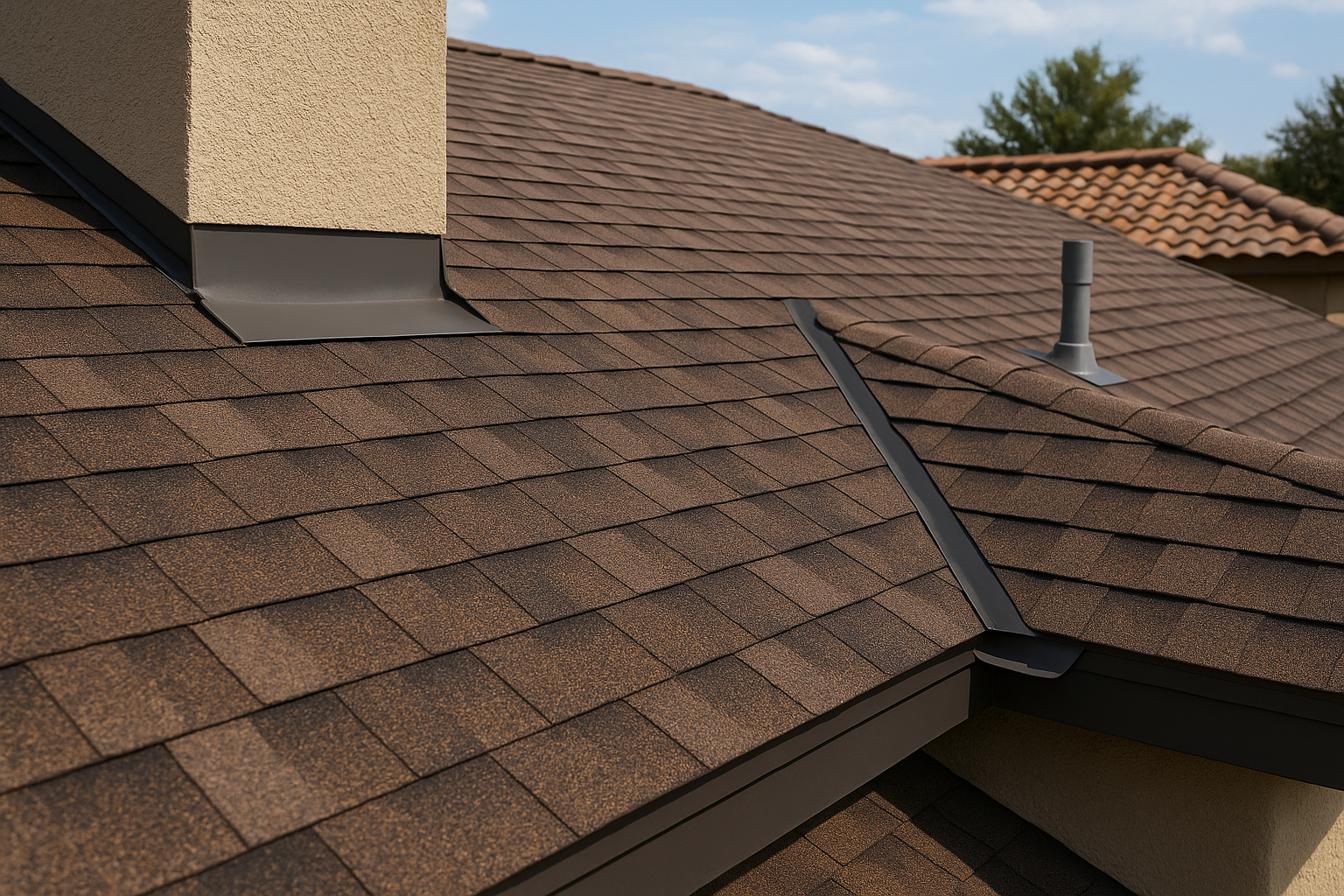
Flashing is the thin, waterproof material — often made of aluminum, galvanized steel, or copper — that is designed to direct water away from vulnerable areas such as roof edges and joints, where leaks are most likely to occur.
Think of it as your roof’s defense system against gravity. It seals gaps and redirects runoff around:
- Chimneys
- Skylights
- Roof valleys
- Vent pipes and exhausts
- Dormers and step transitions
- Wall-to-roof intersections
- Roof edges
Flashing sections are installed at these vulnerable areas to prevent water intrusion and ensure proper weatherproofing.
Choosing the right flashing material is important for durability and weather resistance. Flashing must be properly installed on the surface of the roof to ensure effectiveness.
Without properly installed flashing, these joints become prime entry points for water — especially during heavy rainfall, wind-driven storms, or melting snow.
Fun fact: More than 90% of roof leaks start at flashing points, not through the field shingles themselves.
Why Flashing and Sealing Matter More Than You Think
If your roof is a castle, flashing is its moat — protecting against silent invaders like water and rot. Here’s why flashing and sealing matter so much:
3.1 Flashing prevents water from seeping into vulnerable joints and valleys, stopping leaks before they start. Applying an extra layer of protection, such as flashing tape, can further prevent leaks and enhance the roof’s defense.
3.2 Proper sealing and flashing extend the life of your roof by keeping moisture out, which means fewer repairs and less risk of structural damage. Using durable materials and techniques enhances the durability of the roof and prevents premature failure.
3.3 Flashing and sealing are essential for maintaining the integrity of your home’s structure, preventing costly repairs down the line.
3.4 Water damage can negatively impact the appearance of wood and other materials, reducing curb appeal and leaving visible signs like discoloration or grooves.
Following industry standards for flashing and sealing helps avoid costly restoration work in the future.
✅ 1. They Keep Water Out
Water follows gravity — and any small gap, nail hole, or seam in your roof becomes an opportunity for infiltration. Flashing directs that water safely into gutters or away from seams, preventing penetration into the home’s framing and insulation. The goal is to create a watertight seal that prevents any water from entering the home.
✅ 2. They Protect Roof Longevity
Even minor water seepage can degrade wood decking, rust nails, and weaken underlayment. Over time, this causes warping, sagging, and shingle failure — often requiring full roof replacement far earlier than expected.
✅ 3. They Prevent Mold and Mildew
Moisture trapped in attic spaces or insulation creates ideal conditions for mold growth. This not only damages your home’s structure but also affects indoor air quality and family health.
✅ 4. They Preserve Curb Appeal and Property Value
A roof that’s properly sealed and flashed looks cleaner and ages gracefully. Buyers know a well-maintained roof means fewer future costs — adding value when it’s time to sell.
The Role of Sealants: The Unsung Hero of Leak Prevention
Sealants — sometimes called roofing caulk or roofing cement — work hand in hand with flashing. They create watertight barriers at seams, joints, fasteners, and around protrusions.
At Reimagine Roofing, we use high-grade, UV-resistant roofing sealants engineered for extreme climates. It is important to select the right sealant that is compatible with the flashing material and suitable for the expected weather conditions. Unlike generic silicone or acrylic caulks, professional-grade sealants expand and contract with temperature changes, ensuring long-term flexibility and adhesion.
Before you apply sealant, always clean the surface thoroughly and remove any old sealant to ensure proper adhesion and sealing effectiveness.
Common sealant applications include:
- Flashing laps and overlaps
- Nail heads or screw fasteners
- Roof penetrations (vents, pipes, skylights)
- Metal panel seams
- Transition joints between materials
When applying sealant, avoid doing so during extreme cold, as it can negatively affect the curing process and the sealant’s performance.
When these seals fail or dry out, even the smallest breach can channel water directly under your roofing system.
Common Signs of Flashing or Sealant Failure
Recognizing early warning signs can save thousands in repairs. The extent of water damage can vary significantly, so it’s important to assess the extent to determine the appropriate repair strategy. Here’s what to look for:
| Warning Sign | What It Means | Possible Damage |
|---|---|---|
| Water stains on ceilings or walls | Leaks through failed flashing or sealant | Mold, drywall damage |
| Rust streaks near roof joints | Corroded metal flashing | Structural deterioration |
| Missing or cracked caulk around vents/chimneys | UV degradation or aging | Water entry point |
| Damp insulation or musty attic smell | Hidden moisture accumulation | Mold and wood rot |
| Curling shingles near flashing | Poor adhesion or water intrusion | Accelerated roof wear |
Tip: Even if you don’t see obvious leaks, slow water seepage can cause damage behind the scenes. Annual inspections are your best defense.
How Weather and Climate Impact Flashing and Sealing
Your geographic location plays a huge role in how quickly flashing and sealing materials deteriorate. Here’s how the climate in your area affects roof integrity:
Arizona & New Mexico: UV and Thermal Expansion
- Extreme heat causes metal flashing to expand and contract daily.
- Cheap sealants dry out and crack under constant sun exposure.
- Dust storms can erode sealant edges, exposing gaps.
Florida: Humidity and Hurricanes
- Salt-laden air accelerates corrosion on metal flashing.
- High winds lift shingles and expose flashing seams.
- Constant rain tests every inch of waterproofing — even one gap can mean trouble.
Utah: Freeze-Thaw Cycles
- Water seeps into cracks, freezes, and expands — widening gaps.
- Ice dams form, forcing meltwater under shingles and flashing.
- Seals must remain flexible in sub-zero temperatures.
New Jersey: Coastal Rains and Seasonal Swings
- Frequent rainstorms and snow melt strain roof drainage systems.
- Sealants degrade faster in fluctuating wet/dry cycles.
- Older flashing systems corrode over time without maintenance.
That’s why Reimagine Roofing customizes flashing materials and sealants for each region — what works in Phoenix may not hold up in Miami or Salt Lake City.
Professional Flashing Installation: What It Involves
Installing or repairing flashing isn’t a DIY project — it requires precision and expertise. For complex or hard-to-reach repairs, seeking professional help is essential to ensure safety and correct installation. Our certified Reimagine Roofing technicians follow strict protocols to ensure watertight performance.
Here’s a step by step guide to proper flashing installation:
- Remove old or damaged flashing and inspect the area for hidden moisture.
- Clean and prepare the surface for new flashing.
- Cut and fit new flashing pieces to size, ensuring tight seams.
- Secure flashing with appropriate fasteners and seal all edges.
- Test for leaks and make final adjustments.
Specialized equipment, such as moisture meters and thermal imaging cameras, is used during installation and inspection to ensure quality control and long-lasting results.
Step-by-Step Overview:
- Inspection & Prep: Identify weak spots, corrosion, and water paths.
- Removal: Carefully detach old or damaged flashing without harming shingles or underlayment.
- Cutting & Fitting: Measure and trim new flashing to exact dimensions.
- Sealing: Apply high-quality, weather-resistant sealant under and over joints.
For added durability and extra waterproofing, flashing tape can be applied over seams and joints before fastening.
- Fastening: Secure flashing with rust-proof nails or screws, ensuring proper overlap.
- Final Check: Water-test to confirm complete waterproofing.
Quality control is everything — even a small misalignment can let water in. That’s why our teams undergo advanced training and use thermal imaging tools to detect hidden moisture before finishing the job.
How to Maintain Your Roof’s Flashing and Sealant
Flashing and sealants don’t last forever — but with proactive care, they can protect your home for decades. Some maintenance and repairs, such as flashing or water damage repairs, may be covered by homeowners insurance, but what is covered will vary by policy.
As part of your routine maintenance, remember to inspect not only flashing and sealants but also siding for any signs of water intrusion or damage.
Neglecting regular maintenance can result in expensive restoration work to return your property to its pre-damage condition.
Annual Inspections
Schedule a professional roof inspection at least once a year, ideally before and after severe weather seasons.
Reimagine Roofing’s comprehensive inspection includes:
- Drone-assisted visual assessment
- Infrared scanning for hidden leaks
- Sealant elasticity and adhesion tests
- Corrosion checks on all flashing points
Routine Maintenance
Between inspections, homeowners can:
- Keep gutters clear to prevent water pooling
- Remove debris near valleys and vents
- Visually check for cracked or loose flashing after storms
- Reapply sealant when signs of cracking appear
Timely Repairs
Don’t delay minor flashing fixes — small leaks can become structural nightmares. Water that seeps through joints can rot framing, rust fasteners, and even cause ceiling collapse.
Real-Life Example: A $200 Fix That Saved a $15,000 Roof Replacement
One Arizona homeowner contacted Reimagine Roofing after noticing a faint ceiling stain. A quick inspection revealed deteriorated sealant around the chimney flashing — a $200 repair.
Had they waited, water would’ve rotted the roof decking and framing, requiring a full replacement. Early intervention saved over $14,800 in potential damage.
This story repeats across thousands of homes. Flashing and sealing maintenance may seem small, but the savings are enormous.
Why Choose Reimagine Roofing for Leak Prevention
At Reimagine Roofing, we go beyond basic patchwork. Recognized as a top rated roofing company for our commitment to quality and customer satisfaction, we specialize in long-term leak prevention strategies, tailored to each home’s design and local climate.
Our Approach:
- Advanced Diagnostics: Drone imaging, moisture meters, and leak mapping.
- Premium Materials: High-end metal flashing and UV-stable sealants rated for 20+ years.
- Certified Technicians: Trained in all major roofing systems, including tile, shingle, and metal.
- Lifetime Workmanship Warranty: Peace of mind for as long as you own your home.
We’ve built our reputation on precision craftsmanship and proactive maintenance — helping homeowners in Arizona, Florida, New Mexico, Utah, and New Jersey avoid costly repairs and enjoy leak-free living year-round.
When to Call the Professionals
You should schedule a professional inspection if:
- Your roof is over 10 years old
- You notice water stains or peeling paint indoors
- You’ve experienced a major storm or hurricane
- You see rust, cracks, or missing sealant near roof joints
Even if your roof “looks fine,” small gaps can let in water slowly — causing hidden rot that only becomes visible years later. Prevention is always cheaper than repair.
The Reimagine Roofing Advantage: Local Expertise, National Standards
What sets us apart is our deep understanding of each region’s roofing challenges:
| State | Unique Challenge | Our Solution |
|---|---|---|
| Arizona | UV exposure & heat stress | Reflective coatings + metal flashing with heat-resistant sealants |
| Florida | Heavy rains & hurricane winds | Corrosion-proof fasteners + double-sealed flashing seams |
| New Mexico | Dust & sun damage | Silicone-based sealants resistant to dry cracking |
| Utah | Freeze-thaw cycles | Flexible cold-weather flashing systems |
| New Jersey | Humidity & coastal storms | Marine-grade flashing and anti-fungal sealants |
We don’t just install roofs — we engineer protection systems designed for your local environment.
How Proper Flashing and Sealing Add Value to Your Home
Investing in professional flashing and sealing doesn’t just prevent damage — it adds measurable value.
Higher Appraisal Value
Home inspectors rate roofing condition heavily in property valuations. Leak-free documentation boosts market value.
Lower Insurance Claims
Insurance companies love proactive homeowners. A well-maintained roof reduces claim frequency and can even lower premiums.
Improved Energy Efficiency
Tight seals reduce drafts, improve insulation performance, and lower energy bills — a hidden benefit most homeowners overlook.
Protect Your Roof, Protect Your Home
Your roof’s flashing and sealant system might be invisible — but it’s doing the heavy lifting to keep your home safe and dry.
Ignoring small issues can lead to massive damage, while proactive maintenance ensures decades of worry-free protection.
At Reimagine Roofing, we believe prevention is the best investment a homeowner can make.
Get Your Free Roof Leak & Flashing Inspection Today
Don’t wait until water stains appear — by then, it’s too late.
Book Reimagine Roofing’s FREE, no-obligation inspection to identify weak spots, seal potential leaks, and protect your home before damage sets in.
✅ Free inspection & quote within 24 hours
✅ Expert technicians, certified across 5 states
✅ Long-lasting flashing and sealing solutions tailored to your home
Get Fast quote online to secure your home’s first line of defense against water damage.
Reimagine Roofing — Smarter roofs. Stronger homes. Peace of mind.
Frequently Asked Questions
Q: How long does roof flashing last?
Typically 15–30 years, depending on the material and climate. Copper lasts longest; galvanized steel may corrode faster in humid regions.
Q: Can I reseal my flashing myself?
DIY sealant can work short-term, but most leaks stem from deeper structural issues. Always have a professional inspect before applying new sealant.
Q: What’s the best sealant for roofs?
High-quality polyurethane or silicone-based sealants, UV-rated and flexible under temperature swings.
Q: How much does flashing repair cost?
Minor repairs range from $150–$500, while full replacements for chimneys or valleys can range from $800–$2,000 depending on roof complexity.
Popular Posts