

Why Underlayment Is Critical for Arizona Roof Performance

Why Underlayment Is Critical for Arizona Roof Performance
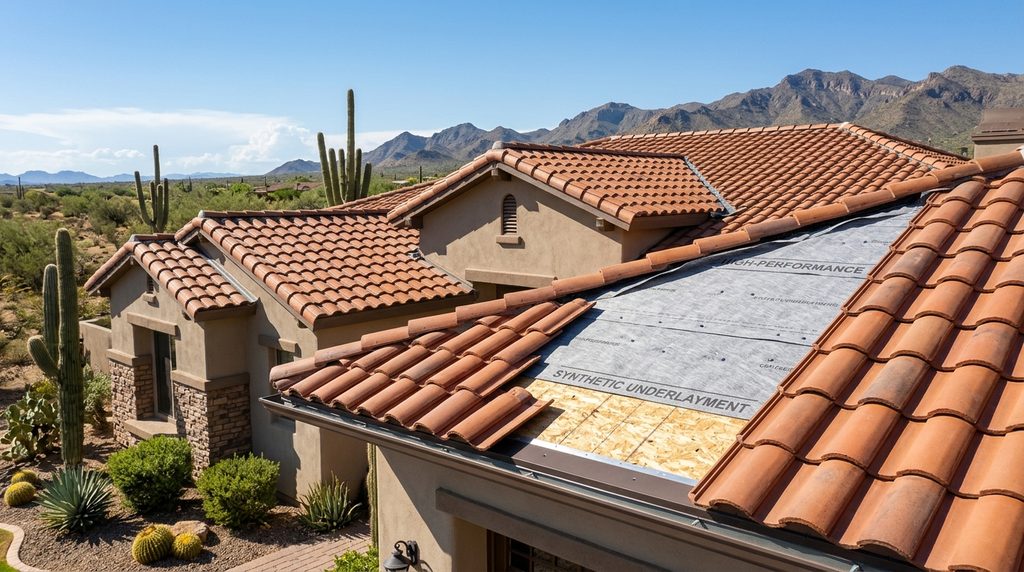
Arizona roofs face some of the harshest conditions in the country. Intense UV exposure, triple-digit summer temperatures, monsoon storms, wind-driven rain, dust, and sudden temperature swings all place significant stress on roofing systems. While homeowners often focus on shingles, tiles, or metal panels, one of the most important components of a high-performing roof is hidden from view: the underlayment.
Roof underlayment serves as a critical protective barrier between your roof covering and the structure of your home. In Arizona, where weather extremes are common, the quality and condition of your underlayment often determine how well your roof performs over the long term.
At Reimagine Roofing, we regularly inspect roofs throughout Arizona and find that underlayment issues are among the leading causes of roof leaks, moisture intrusion, and premature roof replacement. Understanding the role of underlayment can help homeowners make smarter decisions about maintenance, repairs, and roof replacements.
What Is Roof Underlayment?
Roof underlayment is a water-resistant or waterproof layer installed directly over the roof deck and underneath the visible roofing material.
Think of it as your roof’s backup defense system. While shingles, tiles, or metal roofing shed most of the water and protect against sunlight, the underlayment stands ready to prevent moisture from reaching the decking if water penetrates the primary roofing material.
Without quality underlayment, even a small roofing issue can allow water to reach the structure beneath, leading to extensive damage.
Modern roofing systems typically utilize one of three underlayment categories:
Asphalt-Saturated Felt
Often called “felt paper” or “tar paper,” this traditional underlayment has been used for decades.
Benefits include:
- Lower initial cost
- Widely available
- Familiar installation methods
Drawbacks for Arizona homes include:
- Less heat resistance
- Faster deterioration from high temperatures
- Greater susceptibility to tearing
- Reduced lifespan compared to synthetic options
Synthetic Underlayment
Synthetic underlayment has become increasingly popular throughout Arizona.
Advantages include:
- Superior durability
- Better tear resistance
- Enhanced UV protection
- Improved water resistance
- Longer service life
- Better performance in extreme heat
Many roofing professionals prefer synthetic products because they can withstand Arizona’s demanding climate more effectively than traditional felt.
Self-Adhering Waterproof Membranes
These premium products create a watertight seal and are commonly used in vulnerable areas such as:
- Roof valleys
- Penetrations
- Flashing details
- Low-slope sections
For homes exposed to severe weather or moisture concerns, these membranes provide an additional layer of protection.
Arizona’s Climate Creates Unique Roofing Challenges
Many roofing products perform differently in Arizona than they do elsewhere in the country.
The state’s climate presents several challenges that make underlayment especially important.
Intense Solar Radiation
Arizona receives some of the highest levels of solar exposure in North America.
Daily exposure to ultraviolet rays can cause roofing materials to age faster than expected. Over time, prolonged UV exposure can degrade protective barriers and reduce their effectiveness.
Quality underlayment designed for high-heat climates helps maintain protection even as roofing materials endure years of intense sunlight.
Extreme Heat
Summer roof surface temperatures can far exceed ambient air temperatures.
A day with a weather forecast of 110°F can result in roof surface temperatures considerably higher depending on roofing material color and composition.
These extreme temperatures can:
- Accelerate material aging
- Cause expansion and contraction
- Stress roofing components
- Shorten product lifespan
Underlayment must be capable of handling these conditions without cracking, shrinking, or deteriorating.
Monsoon Storms
Arizona’s monsoon season introduces a different set of challenges.
Strong storms can bring:
- Wind-driven rain
- Heavy downpours
- Flying debris
- Sudden moisture exposure
Even well-installed roofing materials can occasionally allow water intrusion during severe weather events. The underlayment provides a crucial secondary waterproof barrier.
Flash Flood Conditions
Many monsoon storms produce significant volumes of water over short periods.
When rainfall overwhelms drainage paths or wind forces water beneath roofing materials, underlayment becomes essential for protecting the roof deck and home interior.
The Underlayment Is Often the Most Important Part of a Tile Roof
This fact surprises many Arizona homeowners.
Tile roofs are extremely popular throughout the state because they offer:
- Excellent aesthetics
- Strong UV resistance
- Long service life
- Compatibility with Southwestern architecture
However, roof tiles themselves are primarily water-shedding materials.
Contrary to popular belief, tiles are not the waterproof component of the roofing system.
The underlayment beneath the tiles provides most of the roof’s actual waterproof protection.
As tile roofs age, broken tiles, shifted tiles, and deteriorated components can expose the underlayment to more weather exposure. When the underlayment reaches the end of its service life, homeowners often begin experiencing leaks despite the tile roof appearing relatively intact.
This is one reason many tile roof replacement projects in Arizona involve replacing the underlayment while reusing serviceable roof tiles.
How Underlayment Protects Your Home
Prevents Water Intrusion
The primary purpose of underlayment is moisture protection.
If rainwater works beneath roofing materials due to:
- Wind
- Damaged tiles
- Cracked shingles
- Flashing failures
- Construction defects
The underlayment acts as a backup barrier that prevents water from reaching the decking.
Protects Roof Decking
Roof decking is typically made from plywood or oriented strand board (OSB).
Once moisture reaches these materials, homeowners may face:
- Rot
- Structural weakening
- Delamination
- Mold growth
Replacing damaged decking can significantly increase roofing costs.
Improves Wind Resistance
High-quality synthetic underlayment often contributes to a stronger roofing assembly.
When installed correctly, it helps:
- Reduce moisture intrusion during storms
- Protect exposed decking during construction
- Enhance overall system resilience
Enhances Energy Performance
Some advanced underlayment products include reflective technologies that help reduce heat transfer into attic spaces.
While underlayment alone will not dramatically lower utility bills, it can contribute to overall roofing efficiency when paired with proper ventilation and insulation.
Common Underlayment Problems in Arizona
Over time, every roofing system ages.
Arizona homeowners should be aware of the warning signs that may indicate underlayment deterioration.
Cracking and Brittleness
Years of heat exposure can cause some underlayment materials to dry out and become brittle.
When this occurs, cracks may form, creating pathways for water intrusion.
Wrinkling and Shrinkage
Aging materials may contract or wrinkle over time.
These distortions reduce protection and can allow moisture penetration.
Torn Sections
Wind events or roof movement can damage weakened underlayment.
Even small tears can create vulnerabilities.
Exposed Areas
Missing roofing materials can expose underlayment to direct sunlight.
Extended UV exposure can accelerate breakdown and shorten lifespan.
Persistent Leaks
Recurring leaks often indicate issues beneath the surface.
While homeowners sometimes focus on replacing visible roofing materials, deteriorated underlayment may be the actual source of the problem.
Signs Your Arizona Roof May Need New Underlayment
You may benefit from a professional roof inspection if you notice:
- Water stains on ceilings
- Attic moisture
- Mold growth
- Damp insulation
- Visible roof leaks
- Missing or broken tiles
- Aging roofing systems
- Interior discoloration after storms
Even if no leaks are visible, older roofs may have underlayment nearing the end of its useful life.
Routine inspections can identify vulnerabilities before expensive interior damage occurs.
Why Professional Installation Matters
Even the best underlayment product can fail if installed incorrectly.
Proper installation requires attention to:
Surface Preparation
The roof deck must be properly prepared before installation.
Old materials, damaged decking, and structural issues should be addressed first.
Correct Overlaps
Underlayment seams require precise overlap dimensions.
Improper spacing can create avenues for water intrusion.
Flashing Integration
Underlayment must work seamlessly with:
- Chimney flashing
- Skylights
- Plumbing vents
- Valleys
- Roof transitions
These areas account for many roofing leaks.
Manufacturer Compliance
Each roofing manufacturer provides installation specifications designed to maximize performance and maintain warranty protection.
Professional installers understand these requirements and apply best practices throughout the installation process.
Why Synthetic Underlayment Is Often the Best Choice for Arizona
Many Arizona roofing professionals recommend synthetic underlayment because it is particularly well suited for desert environments.
Benefits commonly include:
Better Heat Tolerance
Synthetic products are engineered to handle extreme temperatures without degrading as quickly as traditional felt.
Extended Service Life
Many synthetic systems offer significantly longer performance expectations.
Superior Strength
These products resist tearing during installation and severe weather.
Reduced Moisture Risk
Advanced water resistance helps provide improved protection during monsoon storms.
For many homeowners, investing in premium underlayment can reduce long-term maintenance costs and provide greater peace of mind.
The Cost of Ignoring Underlayment Problems
Underlayment issues often begin as minor concerns.
Unfortunately, small roofing problems rarely stay small.
Potential consequences include:
- Deck rot
- Mold remediation
- Ceiling repairs
- Attic damage
- Insulation replacement
- Structural deterioration
- Interior water damage
The cost of proactive inspection and maintenance is often far less than the expense of emergency repairs following a major leak.
Roof Inspections Help Protect Your Investment
Many Arizona homeowners are unaware of their roof’s condition because underlayment cannot be seen during a ground-level visual inspection.
Professional inspections can identify:
- Aging underlayment
- Broken roof tiles
- Flashing deficiencies
- Storm damage
- Ventilation concerns
- Moisture risks
Routine evaluations allow homeowners to address problems before significant damage develops.
Choose a Roofing Partner That Understands Arizona Conditions
Arizona roofing requires specialized expertise.
Materials that perform well in cooler regions may not deliver the same results under intense desert heat and monsoon exposure.
At Reimagine Roofing, we understand the unique challenges Arizona homeowners face. Our team evaluates the entire roofing system, including the critical components hidden beneath the surface. Whether you need a roof inspection, underlayment replacement, repairs, or a complete roof upgrade, we focus on solutions designed for long-term performance in Arizona’s demanding climate.
Book Your Roof Inspection Today
If your roof is aging, showing signs of wear, or has not been professionally inspected in several years, now is the time to take action.
The underlayment beneath your roof may be one of the most important components protecting your home, yet it is often overlooked until problems arise.
Be sure to use our convenient online quote tool to get started and discover how we can help maximize your Arizona roof’s performance, durability, and lifespan.
Popular Posts


