Is Your Roof Ready for PA’s Humid Summers and Mold Risks?
Is Your Roof Ready for PA’s Humid Summers and Mold Risks?
Attic Ventilation Pennsylvania: Is Your Roof Ready for PA’s Humid Summers and Mold Risks?
How Southeastern Pennsylvania heat and humidity can quietly wreck your attic — and what to do about it before energy bills and mold spike.
Pennsylvania homeowners are used to thinking about roofs in winter: snow loads, ice dams, freeze-thaw leaks. But if you live in Southeastern PA, along the Delaware River, Schuylkill River, Susquehanna River, or any low-lying valley where summer air gets thick and still, humidity is the season that silently ages roofs the fastest.
Hot, humid summers create a perfect storm in attics:
- Outdoor moisture drifts into the roof cavity and gets trapped.
- Heat builds under the roof deck for long stretches.
- Condensation forms when hot, wet air hits cooler surfaces.
- Mold spores find a home and multiply.
- Shingles blister and wear out sooner than expected.
- Your AC works harder to fight attic heat, driving up bills.
Proper airflow is essential to prevent heat buildup and protect homes from the seasonal extremes of Pennsylvania’s climate.
Summer comfort and energy costs are top-of-mind right now — and your roof plays a bigger role in both than most people realize. In Pennsylvania, summer humidity often sits in that danger zone where moisture doesn’t evaporate easily. When airflow is weak, attics can stay damp long enough for mold to take hold without a single roof leak. That’s why “roof mold prevention” and “attic ventilation Pennsylvania” are becoming common homeowner searches every summer. The unique challenges of Pennsylvania’s climate make proper airflow critical for maintaining efficiency and prolonging the lifespan of your home systems.
This guide breaks down why humid PA summers are a real roofing risk, how attic ventilation actually works, what “balanced intake and exhaust” means, and how to spot early mold or heat damage. You’ll also learn which upgrades matter most and how Reimagine Roofing helps Pennsylvania homes stay cooler, drier, and protected for the long haul.
Why Pennsylvania Summers Are Tougher On Roofs Than They Look
A PA roof doesn’t fail from one big dramatic moment. Most fail gradually — through thousands of small stress cycles. Pennsylvania’s climate presents unique challenges for roof ventilation, which can significantly impact your roof’s health over time. In summer, two stressors team up against your roof:
In summary, understanding these stressors and the importance of roof ventilation is key to maintaining your roof’s health in the face of Pennsylvania’s unique challenges.
Stressor A: Heat load
On a July afternoon, your shingles absorb solar heat. Dark shingles can get dramatically hotter than the air around them. That heat radiates downward into your attic. If your attic can’t vent that heat out, temperatures stay high for hours, sometimes even after sunset.
Long-term attic heat does three things:
- It bakes shingles from below. That accelerates aging, drying, and cracking. UV rays from the sun also contribute to shingle degradation by loosening and shedding granules, which can lead to roof damage over time.
- It superheats moisture. Warm air holds more water vapor, raising attic humidity.
- It stresses the entire roofing system. Decking expands and contracts, fasteners loosen, and sealants fatigue.
Stressor B: Humidity + Condensation
Warm air can hold a lot of moisture. Southeastern PA summers often have high dew points, which means the air is already loaded with water vapor. When that air sneaks into your attic and touches a cooler surface — like shaded roof decking, an AC duct, or a cold attic gable in the evening — vapor turns into liquid droplets.
So the pattern looks like this:
- day: attic heats up and fills with humid air
- evening: surfaces cool down
- water condenses on wood and metal
- moisture lingers because airflow is weak
- mold begins growing
Mold growth is a common result of lingering moisture, and if not addressed, it can lead to health issues for families.
Key idea: You don’t need a roof leak to get attic mold. All you need is humidity + a slow-drying attic.
What Proper Attic Ventilation Really Means
Ventilation isn’t about having “some vents.” It’s about having a designed system that moves air in the right direction. Proper ventilation is essential for maintaining roof health, as roof ventilation systems are specifically designed to ensure proper attic airflow. These systems help regulate temperature, prevent moisture buildup, and contribute to a balanced and energy-efficient home environment.
A correct vent system does this:
- Fresh air enters low (intake).
- Hot, moist air exits high (exhaust).
- Air sweeps along the underside of the roof deck, drying it out and carrying heat away.
Intake vs Exhaust
- Intake vents are usually in soffits (under your roof overhang). Properly sized intake and exhaust vents, including intake openings at the lower roof edges, are essential for drawing in cooler air and maintaining effective attic ventilation.
- Exhaust vents are usually at the ridge (peak) or high gables.
Think of intake as the lungs inhaling cool air and exhaust as the lungs exhaling hot, wet air. If either side is missing or blocked, breathing stops.
The Balance Piece (Important!)
Roof systems work best when intake and exhaust are balanced. That doesn’t mean “same number of vents.” It means the airflow capacity of intake roughly matches (or slightly exceeds) the airflow capacity of exhaust. Achieving balanced airflow between intake and exhaust vents is crucial for optimal attic ventilation performance, as it helps prevent pressure imbalances that could compromise the system.
When exhaust is stronger than intake, the attic can start pulling air from places you don’t want it to pull from — like tiny cracks in your ceiling or bathroom fan ducts. That brings more humid indoor air into the attic and makes the problem worse.
Why Southeastern PA homes Are Especially Vulnerable
A roof in Erie ages differently than a roof in Chester County. Southeastern PA has a unique mix of conditions that boost moisture risk.
River Valley Humidity
Homes near rivers or low elevations often sit in thicker, slower-moving humid air. Your attic becomes a sponge if airflow is weak.
Dense Tree Cover
Many neighborhoods in Bucks County, Montgomery County, and Delaware County are shaded by mature trees. Shade can keep roof decks cooler in the day, but it also makes evening condensation more likely because cooler surfaces attract moisture.
Older Housing Stock
Many PA homes were built before modern ventilation norms. We often find:
- soffits that are too small
- soffit vents painted shut
- insulation shoved into eaves blocking airflow
- no baffles to keep airflow channels open
- multiple additions that create dead air zones
- attic floors over-insulated with no matching vent upgrades
Poor ventilation in these older homes can lead to increased moisture problems and reduced energy efficiency.
AC Ductwork in the Attic
If your HVAC ducts run through the attic — common in many Pennsylvania homes — they can be cool enough on humid days to become condensation magnets. That moisture can drip into insulation and framing with zero visible roof leaks.
Put it together, and you get attics that are hot, damp, and slow to dry — perfect mold conditions.
The Most Common Ventilation Problems We See in PA Summers
Here are the problems that show up again and again in summer inspections:
Problem 1: Ridge Vent with No Intake
This is the classic mistake. A contractor installs ridge vent during a reroof but doesn’t open soffits or check if soffit vents are clear. Without intake, ridge vent becomes a weak exhaust hole that can even suck conditioned air out of your home.
Problem 2: Blocked Soffits
Many soffits look vented from the outside but are blocked behind the panel. Paint, debris, or insulation can cut airflow down to nearly nothing.
Problem 3: Short-circuiting Airflow
Mixing vent types incorrectly can cause air to take the shortest path and ignore most of the attic. For example:
- ridge vent + big gable vents
- powered fan + ridge vent
- turbine vents spread near the ridge plus ridge vent
Air enters and exits too close together, leaving the lower roof deck unevenly ventilated and still damp.
Problem 4: Dead Pockets
Dormers, valleys, rear porches, and complex rooflines can create pockets with no airflow. Those are mold hotspots because moisture has nowhere to go.
Problem 5: Too Much Exhaust, Not enough Intake
When exhaust outpowers intake, the attic goes negative pressure. It pulls humid air from wall cavities, ceiling gaps, or unsealed chases. This makes your attic wetter and your home less efficient.
How Bad Ventilation Causes Mold
Let’s walk through the chain reaction in real life:
- Humid air enters the attic through soffits, gaps, or air leaks.
- Attic heat rises, allowing air to hold more moisture.
- Evening cooling drops surface temperatures on wood and metal.
- Condensation forms on decking, nails, and ducts.
- Ventilation can’t dry it fast enough.
- Wood stays damp long enough for mold spores to colonize.
- Mold spreads across sheathing and rafters.
Once mold takes hold, it doesn’t just look bad. It can:
- slowly weaken roof decking
- aggravate allergies and asthma
- create a musty odor that creeps into living space
- become an issue during home resale or inspections
- lead to expensive remediation if it spreads widely
Regular inspections are essential to catch mold growth early and protect your family’s health by maintaining good indoor air quality.
Summer ventilation is mold prevention. Period.
How Humid Heat Damages Shingles
Mold is one half of the summer story. The other half is what humidity and trapped heat do to shingles.
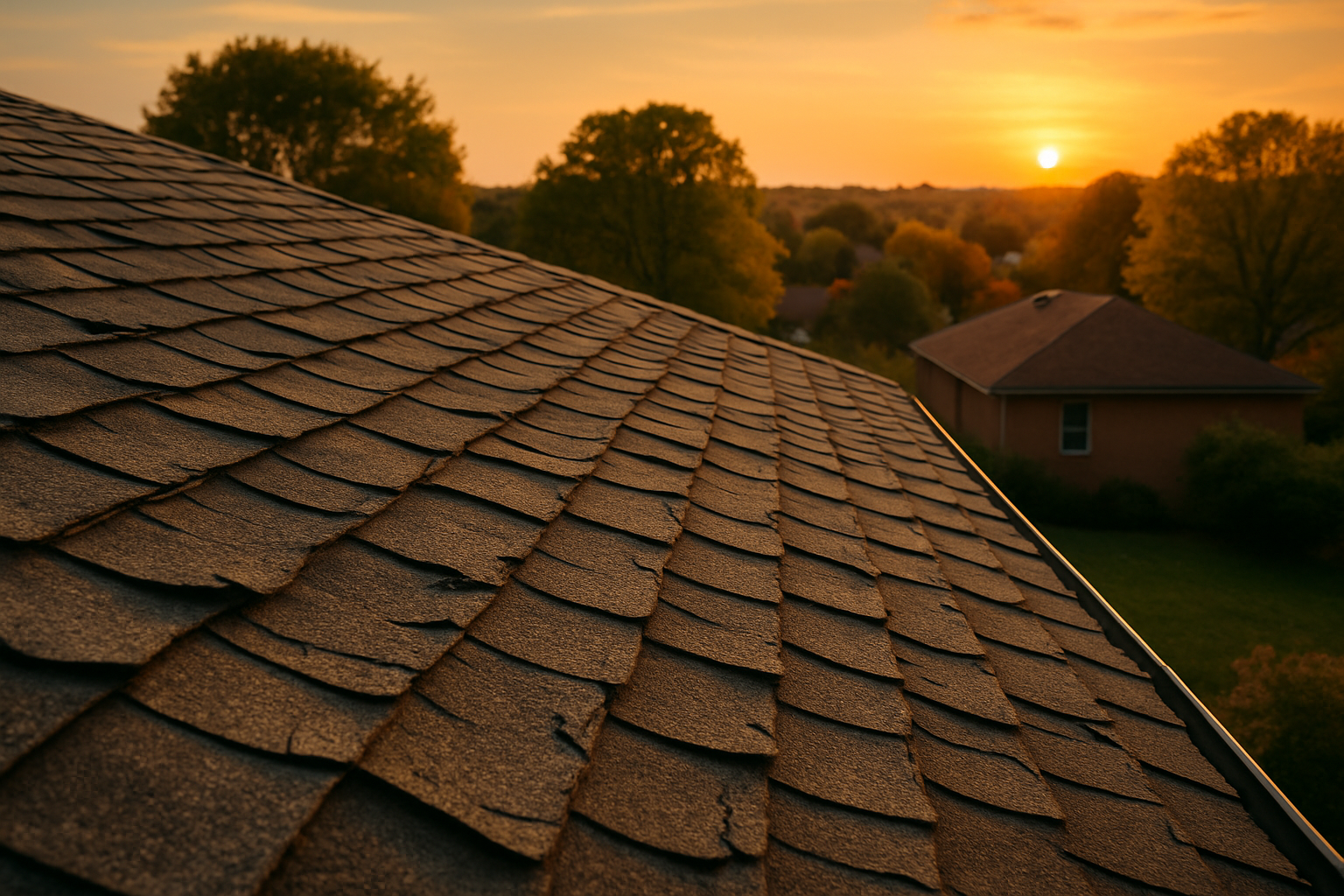
When shingles are exposed to prolonged heat and moisture, they can blister and lose granules, which weakens their protective layer. Damaged shingles can lead to roof damage, water damage, and costly repairs if not addressed promptly. Replacing damaged shingles is essential to prevent leaks and protect your home from further issues.
Shingle Blistering
Blisters are small, raised bubbles in asphalt shingles. They form when moisture or air trapped in the shingle expands under high heat, especially when attic temperatures stay high because ventilation is weak. Over time, blisters burst and shed granules, exposing asphalt to UV and speeding up aging.
Blistering matters because it:
- breaks the protective surface
- accelerates cracking
- shortens roof life by years
- can show up long before a roof hits its “expected” age
Deck Movement and Nail Pops
Heat + moisture cycling causes decking to expand and contract. Over years, nails loosen and lift. That’s how you get nail pops, lifted shingle edges, and small gaps that storms exploit. These problems can compromise the structural integrity of your roof and may indicate underlying structural issues that require professional assessment.
Bad ventilation doesn’t just make your attic uncomfortable. It makes your roof age early.
Signs your Attic is Struggling this Summer
You don’t need to be a roofer to catch ventilation issues early. Look for these warning signs:
Inside the House
- upstairs rooms are noticeably hotter
- AC runs constantly but can’t keep up
- cooling bills spike mid-summer
- musty smell on top floors
- headaches or allergy flare-ups that improve when you leave the house
- ceiling stains that show up without a known leak
- peeling paint on upper walls or ceilings, which can indicate moisture buildup from poor attic ventilation
In the Attic
- dark or fuzzy spots on sheathing or rafters
- rusty nail tips poking through the roof deck
- damp insulation near eaves
- sweaty ducts or drip marks
- attic air feels thick and humid
- heat feels trapped even in the evening
On the Roof
- widespread blistering
- curling shingle edges
- patchy granule loss
- noticeably uneven aging between roof planes
If you’re seeing several of these at once, your roof system is likely under-vented or unbalanced. Extensive damage, such as widespread cracked or missing shingles, significant granule loss, or structural problems like a warped roof deck, may require professional intervention.
What Balanced Intake/Exhaust Looks Like in Practice
“Balanced ventilation” sounds abstract, so here’s a real-home example. Calculating your ventilation needs starts with measuring your attic space. Determine the square footage of your attic space to figure out the appropriate vent area—typically, you need one square foot of ventilation for every 300 square feet of attic space, split evenly between intake and exhaust.
Step 1: Estimate attic area
Say your attic floor is about 1,500 square feet.
Step 2: Apply a baseline ventilation ratio
A common standard is about 1 square foot of net venting for every 150 square feet of attic area.
1,500 ÷ 150 = 10 square feet of net free vent area total.
Step 3: Convert to square inches
10 × 144 = 1,440 square inches of net free vent area.
Step 4: Split between intake and exhaust
Aim for close to half intake, half exhaust, with intake slightly higher.
- about 720 sq in intake
- about 720 sq in exhaust
Step 5: Check the rating of your vents
Each vent product has a net free area rating. You count that rating, not the number of vents.
This is why two roofs can look similar from the ground but perform completely differently in summer.
The Best Ventilation Upgrades for Humid PA Summers
If your attic is under-vented, you may not need a full reroof to fix it. However, it’s important to hire qualified professionals or a local roofing contractor to provide expert services and professional help when upgrading your attic ventilation system. Here are the upgrades that deliver the biggest payoff:
Upgrade 1: Restore soffit intake
This is the single most important ventilation fix for PA homes. We often find soffits that are “vented” in appearance but blocked in reality. Opening them to create clear intake openings at the roof’s lower edges and adding baffles establishes a real airflow path.
Upgrade 2: Continuous ridge vent
Ridge vents provide even exhaust across the roofline. They are typically installed near the roof peak to maximize exhaust efficiency. They pull hot, wet air out where it naturally wants to go. But ridge vents only work when intake is real.
Upgrade 3: Fix dead zones
Dormers, valleys, and rear additions often need a tailored vent plan so airflow reaches every part of the roof deck.
Upgrade 4: Improve air sealing
Ventilation removes attic air. Air sealing reduces the amount of humid indoor air entering the attic in the first place. Both matter.
Upgrade 5: Simplify mixed systems
If your attic has competing vent types and airflow is short-circuiting, sometimes the best fix is removing or closing certain vents so ridge-soffit flow can do its job.
“I have an attic fan — isn’t that enough?”
Attic fans can help in some situations, but they’re not a universal solution.
Two risks:
- They can depressurize your attic. That pulls cooled air from your house into the attic through gaps, raising bills and adding humidity.
- They can disrupt passive vent flow. The fan may draw air from the nearest opening instead of sweeping the roof deck.
Fans are only effective when the ventilation system is already designed correctly.
If you rely on a fan, you still need:
- clear intake
- balanced NFA
- correct airflow paths
- no short-circuiting vents nearby
A Summer Attic Check You Can Do This Week
Here’s a quick homeowner checklist:
- Check soffits visually
- Look for paint-sealed vents or solid panels with no perforations.
- Notice upstairs comfort
- If your second floor feels like an oven, attic heat is likely trapped.
- Sniff test
- Musty smell upstairs or at attic access points is often the earliest mold clue.
- Evening attic feel
- At sunset, a healthy attic cools quickly. A struggling attic stays punishingly hot.
- Look for blisters
- Small shingle blisters in mid-summer are a strong heat/ventilation clue.
- Schedule a professional ventilation evaluation and roof inspection
- A trained roofer can measure airflow capacity, diagnose dead zones, and assess your roof for damage or maintenance needs.
Ventilation vs Insulation: Why Both Matter
Homeowners sometimes hear “add insulation” as the cure for summer heat. Insulation is important, but it solves a different piece of the puzzle.
- Insulation slows heat transfer into your home.
- Ventilation removes heat and moisture from your attic.
If you add a lot of insulation without ensuring airflow at the eaves, you can accidentally block intake and worsen humidity problems. The best summer performance comes from a system approach: insulation + proper intake/exhaust balance.
What a Summer-ready PA Roof System Looks Like
A summer-ready Pennsylvania roof usually has:
- clear, continuous soffit intake
- baffles at eaves to keep airflow open
- a continuous ridge vent or properly sized high exhaust
- no competing vent types causing short circuits
- sealed ceiling penetrations to reduce humidity entry
- attic humidity that can dry quickly after storms or hot days
- shingles showing even, slow aging without wide blister fields
Different types of roof, including flat roofs, may require specific ventilation solutions to ensure optimal performance and prevent issues related to temperature fluctuations and moisture buildup.
If any of those are missing, your roof can still “look fine” while aging faster than it should.
How Reimagine Roofing Helps PA Homes Breathe Better
At Reimagine Roofing, we treat ventilation as a core roofing issue, not a side note. Because if your attic is failing, your roof is next.
Here’s our Pennsylvania approach:
- We measure your attic area and calculate required vent capacity instead of guessing.
- We inspect soffit intake, baffling, ridge continuity, and dead pockets that create mold risk.
- We check for humidity damage and early shingle heat stress so you see what’s happening now.
- We recommend the smallest fix that creates the biggest airflow improvement.
- If you’re reroofing soon, we design the system to meet modern standards so your roof is future-proofed.
Most importantly, we explain everything clearly. You get a real plan, not vague “add a vent” advice.
The Payoff: Comfort, Savings, and Longer Roof life
When ventilation is right, Pennsylvania homeowners typically notice:
- cooler upstairs rooms
- less AC runtime
- lower summer energy bills
- no musty attic smell
- reduced mold risk
- fewer premature shingle issues
- a roof that lasts closer to its rated lifespan
In a humid summer climate, those benefits add up fast — and they make your home more comfortable year after year.
Get a Free Reimagine Inspection.
If you’re in Southeastern Pennsylvania or anywhere summer humidity hits hard, don’t wait for mold stains, blistering, or rising bills to force the decision.
Book your FREE roof and attic ventilation inspection with Reimagine Roofing.
We’ll evaluate intake/exhaust balance, look for hidden humidity damage, check for early shingle heat stress, and give you a clear, photo-backed plan to protect your roof and your home’s comfort.
With Reimagine, you get:
- Free professional inspection
- Ventilation and mold-risk assessment
- Photo-backed findings (no mystery recommendations)
- Summer-comfort focused solutions
- Fast quotes in under 24 hours
- Financing options available
Your roof doesn’t just keep rain out. In Pennsylvania summers, it’s your home’s heat and humidity shield. Let’s make sure it’s doing that job the way it should.
Popular Posts