How Leaf Buildup Damages Your Roof
How Leaf Buildup Damages Your Roof
How Leaf Buildup Damages Your Roof (and What to Do Before It’s Too Late)
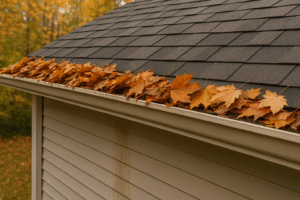
When fall arrives in the Northeast and Mid-Atlantic, tree-lined streets turn into masterpieces of gold, amber, and crimson. But while those falling leaves create postcard-perfect neighborhoods, they can also create a hidden hazard above your head — roof and gutter clogs.
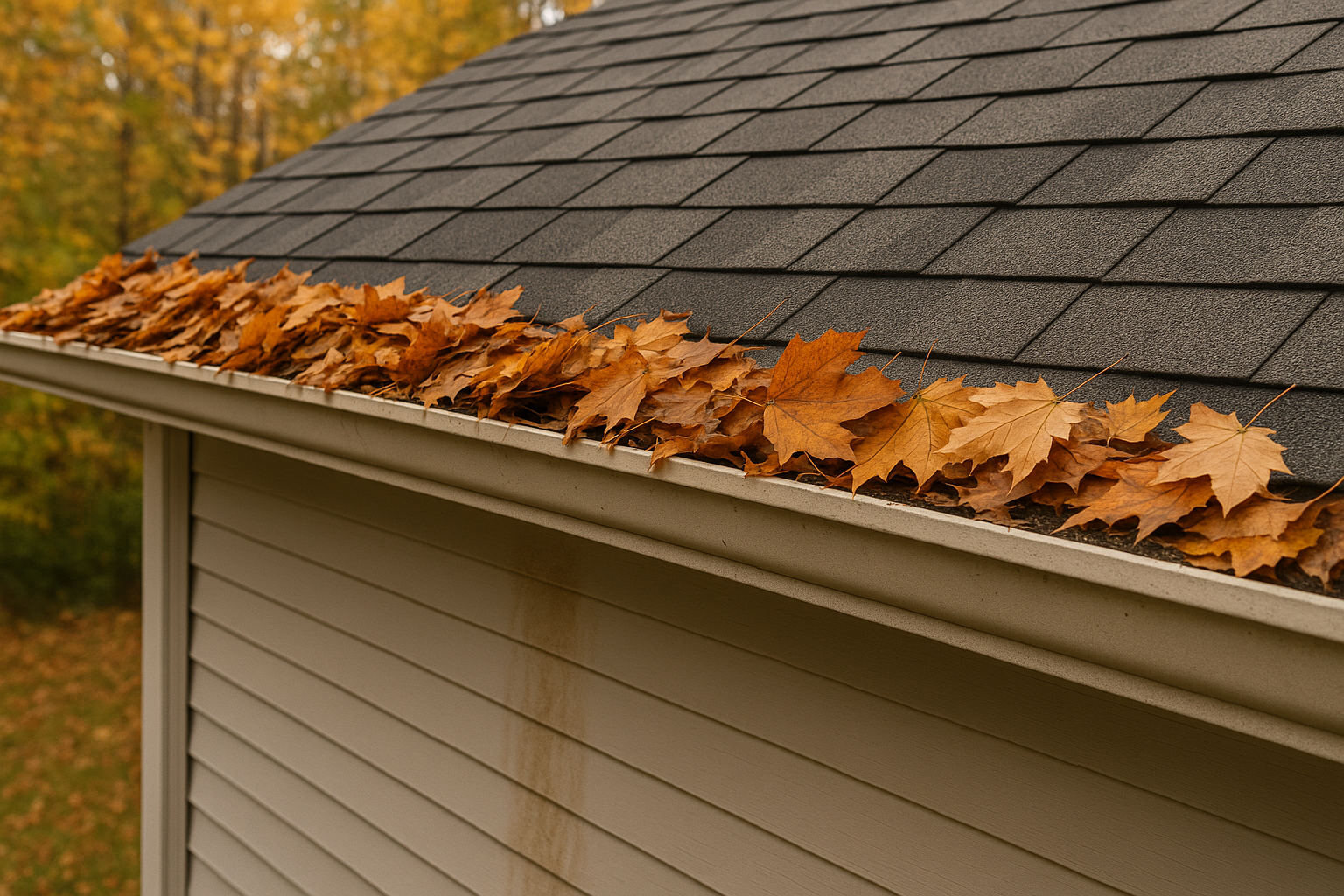
If your gutters are packed with leaves, pine needles, or small branches, it’s not just an inconvenience. That buildup can silently cause moisture damage, wood rot, and mold growth inside your roof structure — issues that can cost thousands of dollars if ignored.
At Reimagine Roofing, we’ve seen firsthand how simple leaf maintenance can make or break a roof’s lifespan in climates like New Jersey, Connecticut, Massachusetts, Maryland, Delaware, and Pennsylvania.
This guide explains exactly how leaf buildup damages your roof, what to do about it, and how to prevent long-term damage — before winter storms make things worse.
How Leaves Clog Gutters and Trap Moisture
The Chain Reaction of Neglected Gutters
Gutters are designed to channel rainwater away from your roof and foundation. When they’re clean, water flows freely into downspouts and drains safely away from your home.
But when leaves and debris accumulate, that system breaks down. Here’s what happens step-by-step:
- Leaves pile up and block water flow.
- Rainwater starts to pool on your roof or overflow the gutters.
- Standing water finds its way under shingles and flashing.
- Moisture seeps into the roof deck (plywood sheathing), insulation, and attic.
- Over time, this trapped moisture weakens the structure and breeds mold.
It’s a slow, silent process — and by the time you notice leaks or sagging, the damage may already be extensive.
The Hidden Dangers of Moisture Damage
In states like Maryland and Delaware, where humidity stays high even into fall, wet organic matter in gutters creates a perfect storm for wood rot and microbial growth.
a. Roof Deck Rot
Your roof deck — the wooden layer beneath your shingles — is highly vulnerable to moisture. Once it’s saturated, it begins to delaminate and weaken.
Rot spreads quickly, compromising your roof’s structural integrity and sometimes requiring full replacement.
Signs of roof deck rot:
- Uneven or sagging roof lines
- “Soft spots” when walking on the roof
- Water stains on ceilings or attic plywood
- A musty odor inside the attic
b. Mold and Mildew Growth
Trapped moisture + organic debris = a breeding ground for mold.
Fungal growth often starts in the gutter trough and migrates to fascia boards, soffits, and attic insulation.
Common consequences:
- Visible black or green mold streaks on siding
- Allergic reactions or respiratory issues indoors
- Damage to insulation and drywall
c. Ice Dams (Winter’s Next Problem)
When fall debris isn’t cleared, it sets up conditions for ice dams in winter.
Snowmelt refreezes at the gutter edge, forming a barrier that pushes water backward under shingles.
This can lead to massive leaks — often mistaken for roof failure when it’s actually a gutter issue.
Why This Problem Is Worse in the Northeast and Mid-Atlantic
Regional Climate Factors
Your service region — from Connecticut down to Delaware — experiences a perfect combination of:
- Deciduous trees: Oaks, maples, and elms shed tons of leaves in October–November.
- Freeze-thaw cycles: Temperatures fluctuate daily, expanding small cracks into big leaks.
- High humidity: Slows evaporation, so roofs stay wet longer.
- Older housing stock: Many homes built pre-1990 lack modern roof ventilation.
This means even a few clogged gutters can create conditions for serious moisture intrusion — especially in older, steep-pitched roofs.
Local Examples
- In New Jersey, leaf litter from oak and pine trees commonly clogs gutters by mid-October.
- Pennsylvania’s longer freeze periods lead to recurring ice dams if debris isn’t cleared.
- Massachusetts homeowners often see moss and algae growth after a wet autumn.
- Delaware and Maryland’s coastal air accelerates rot and corrosion on metal flashing.
All of these issues trace back to simple maintenance neglect during fall.
What You Can Do Right Now: A Step-by-Step Action Plan
The good news? You can prevent nearly all of these issues with routine inspection and cleaning.
Here’s Reimagine Roofing’s recommended fall maintenance checklist:
Step 1: Inspect Your Gutters (Safely)
Use a ladder stabilizer and inspect gutters for:
- Blockages at downspouts
- Sagging or separated gutter sections
- Rust, cracks, or leaks in seams
- Standing water after rainfall
If you’re uncomfortable with heights or lack the right safety gear, call a professional roofing team — gutter cleaning is quick and affordable compared to the cost of repairs.
Step 2: Remove All Debris
Use a gutter scoop, leaf blower attachment, or pressure washer (low setting) to remove:
- Leaves
- Pine needles
- Roof granules
- Bird nests or seed pods
Dispose of the debris far from your foundation to avoid pest attraction.
Step 3: Flush the System
Run water from a hose through each section to confirm proper drainage.
If water backs up, you may need to snake out downspout obstructions.
Step 4: Check for Damage and Mold
Look for:
- Water stains under eaves
- Soft or darkened fascia boards
- Moldy smell near attic vents
Even minor signs of mold indicate moisture intrusion — a cue to schedule a professional roof inspection immediately.
Step 5: Install Preventive Solutions
To stop future buildup, consider:
- Gutter guards or mesh screens
- Downspout strainers
- Roof edge heating cables (for ice dam prevention)
- Proper roof ventilation upgrades
Reimagine Roofing offers custom gutter guard installations and winterization services tailored to each state’s climate.
What Happens If You Ignore Leaf Buildup?
Neglecting leaf buildup can turn a $200 cleaning into a $10,000 problem.
Here’s what we often find during inspections in the Northeast:
First Stage: Surface Water Pooling
- Water collects behind blocked gutters
- Shingle edges lift or curl
- Moss and algae growth accelerate
Second Stage: Subsurface Damage
- Water infiltrates underlayment and deck
- Nails rust; flashing corrodes
- Attic insulation becomes damp and ineffective
Third Stage: Structural Compromise
- Rot weakens trusses and decking
- Mold spreads through insulation and drywall
- Costly full-roof or partial framing replacement needed
In coastal and cold-climate states, damage escalates faster because of salt air corrosion (MD/DE) and freeze-thaw expansion (MA/NJ/PA).
The average roof replacement due to long-term moisture damage can range from $12,000–$25,000, depending on material and size — compared to a few hundred dollars in annual maintenance.
The Role of Professional Roof Inspections
Why DIY Isn’t Always Enough
Even if your gutters look clear, hidden clogs or early-stage leaks can go unnoticed from ground level. Professional roofers can detect:
- Subtle deck softening
- Nail pops and flashing gaps
- Attic condensation from poor airflow
- Micro-mold in underlayment
Reimagine Roofing technicians use thermal imaging, drone inspection, and moisture detection tools to identify these issues before they cause visible damage.
When to Schedule Inspections
- Every fall (after leaf drop)
- After major storms or hurricanes
- Before listing your home for sale
- If you notice water stains or interior humidity spikes
Our certified inspectors in New Jersey, Connecticut, Pennsylvania, Maryland, Delaware, and Massachusetts provide free, no-obligation assessments that can extend your roof’s life by years.
The Mold Connection: How Roof Moisture Affects Indoor Air Quality
Many homeowners don’t realize that a clogged gutter problem can evolve into a health problem.
Mold spores from damp roof materials can infiltrate indoor HVAC systems, leading to poor air quality and potential respiratory issues — especially in humid regions like Maryland and Delaware.
Warning signs of mold contamination:
- Musty smell when running your air conditioning or heat
- Unexplained allergy symptoms
- Visible black or green streaks near vents or ceilings
Reimagine Roofing partners with certified remediation specialists to handle these situations holistically — addressing both the source (the roof) and the symptoms (indoor air contamination).
How to Future-Proof Your Roof from Leaf and Moisture Damage
Beyond seasonal cleanups, here’s how to make your roof more resistant to fall debris:
a. Upgrade to Seamless Gutters
Fewer seams = fewer leak points. Seamless aluminum or copper gutters are especially durable for New Jersey and Pennsylvania climates.
b. Choose Proper Roof Pitch and Drainage Design
Steeper slopes shed water faster. If your roof has flat or low-slope sections, consider adding scuppers or extra downspouts.
c. Use Leaf-Resistant Roofing Materials
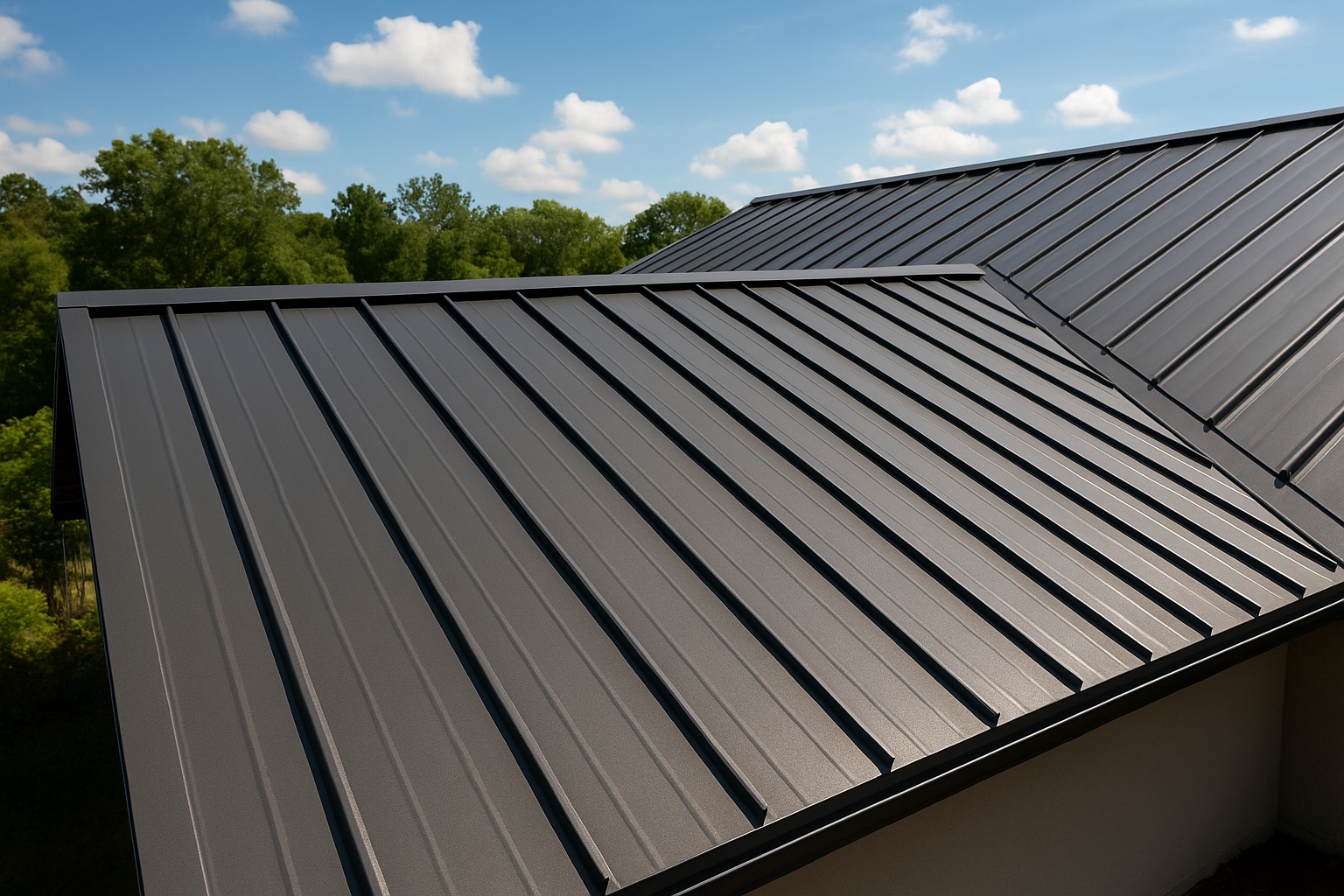
Modern architectural shingles and metal roofs resist debris adhesion better than traditional 3-tab shingles.
d. Improve Ventilation
Balanced attic ventilation keeps your roof deck dry and reduces condensation that feeds rot.
Reimagine Roofing can retrofit ridge and soffit vents during routine maintenance visits.
The Economics of Prevention: Small Investment, Big Returns
| Maintenance Task | Frequency | Typical Cost | Potential Savings |
|---|---|---|---|
| Gutter cleaning | 2x per year | $150–$300 | Prevents $5,000+ in rot repairs |
| Gutter guard installation | Once | $800–$1,200 | Eliminates 90% of future cleaning |
| Annual roof inspection | 1x per year | Free (Reimagine offer) | Early leak detection = $10,000+ savings |
| Mold remediation (if delayed) | As needed | $2,000–$8,000 | Avoidable with preventive care |
Homeowners who keep up with seasonal maintenance typically extend their roof’s life by 5–10 years, adding measurable resale value and peace of mind.
Local Roofing Insights by State
New Jersey
High leaf density + humid autumns make NJ one of the top states for gutter overflows.
Most issues arise in Bergen, Morris, and Somerset counties where older homes have undersized gutters.
Connecticut
With long tree canopies and coastal weather, CT roofs often face algae growth and wood fascia rot.
We recommend biannual cleanings and zinc/moss prevention strips.
Massachusetts
Historic homes mean older rooflines.
Leaf buildup often causes ice dams and ridge cap leaks after the first freeze.
Maryland & Delaware
The coastal salt mix accelerates metal corrosion on flashing and gutters.
Copper or galvanized materials offer better longevity here.
Pennsylvania
PA’s heavy leaf drop and snow load combine for the worst winter ice dam risks.
A clean gutter system and attic insulation are your first line of defense.
What to Do Before It’s Too Late
If it’s late October and you haven’t cleared your gutters yet — you still have time, but don’t wait for the first freeze.
Here’s your 3-step action plan:
- Schedule a free roof and gutter inspection with Reimagine Roofing.
We’ll check for blockages, water damage, and early signs of rot or mold. - Ask about gutter guard installation to keep your system clear all year.
- Get a written estimate within 24 hours for any repairs or upgrades.
Our certified roofing specialists in NJ, CT, MA, MD, DE, and PA provide full transparency, fast quotes, and a no-pressure process — because protecting your home shouldn’t be stressful.
Your Roof’s Health Starts with Your Gutters
Leaf buildup may seem like a small seasonal nuisance, but the damage it can cause is anything but small.
Clogged gutters lead to standing water, rot, mold, and expensive structural damage — all preventable with a few hours of maintenance or a quick professional visit.
As temperatures drop across the Northeast and Mid-Atlantic, now is the perfect time to schedule your free fall roof inspection before rain turns to snow.
Don’t let autumn leaves ruin your winter peace of mind.
Book your free inspection, fast quote, and same-week service in New Jersey, Connecticut, Massachusetts, Maryland, Delaware, or Pennsylvania.
Get Started Today
✅ Free roof & gutter inspection
✅ Fast, 24-hour quotes
✅ Licensed & insured in all service states
Partner with Reimagine Roofing now or request your quote online — before your leaves turn into leaks.
Popular Posts