How Arizona Roofs Survive Monsoon Season
How Arizona Roofs Survive Monsoon Season
How Arizona Roofs Survive Monsoon Season (and What Happens After)
Arizona’s Wild Summer and What Comes After
If you live in Arizona, you know that monsoon season is no small event — it’s a defining part of desert life. From June through September, the skies open with torrential downpours, violent winds, and lightning shows that rival any natural spectacle in the U.S.
But while these storms bring temporary relief from the desert heat, they also wreak havoc on Arizona roofs. From thermal cracking caused by temperature swings to tile loosening, UV damage, and hidden leaks, the aftermath of monsoon season can silently shorten your roof’s lifespan.
As fall settles in, now is the time to act — before those small storm damages turn into costly repairs. In this guide, we’ll explain exactly how Arizona roofs survive monsoon season, what problems often arise afterward, and how a professional post-monsoon inspection from Reimagine Roofing can save you thousands in long-term repairs.
The Science Behind Arizona’s Monsoon Season
Arizona’s monsoon weather is fueled by a clash of air masses. Hot, dry desert air meets moist tropical air from the Gulf of California and Pacific Ocean, triggering powerful thunderstorms, wind bursts, and flash floods.
Key Impacts on Roofs:
- Wind Gusts (40–70 mph) – can lift tiles, shingles, or flashing.
- Heavy Rain – saturates underlayment, exposes weak seals.
- Hail and Debris – cause surface bruising, cracked tiles, or punctures.
- Temperature Swings (100°F to 70°F daily) – stress roofing materials, leading to thermal cracking.
Most Arizona homeowners don’t realize it, but this yearly cycle of heat and water is one of the toughest environments for any roofing material. Even the best-installed roofs will degrade faster without proactive maintenance.
What Happens to Your Roof During a Monsoon
Every part of your roofing system — from shingles to vents — is tested during Arizona’s monsoon season. Here’s a closer look at how different materials and roof structures handle the storm.
1. Asphalt Shingle Roofs
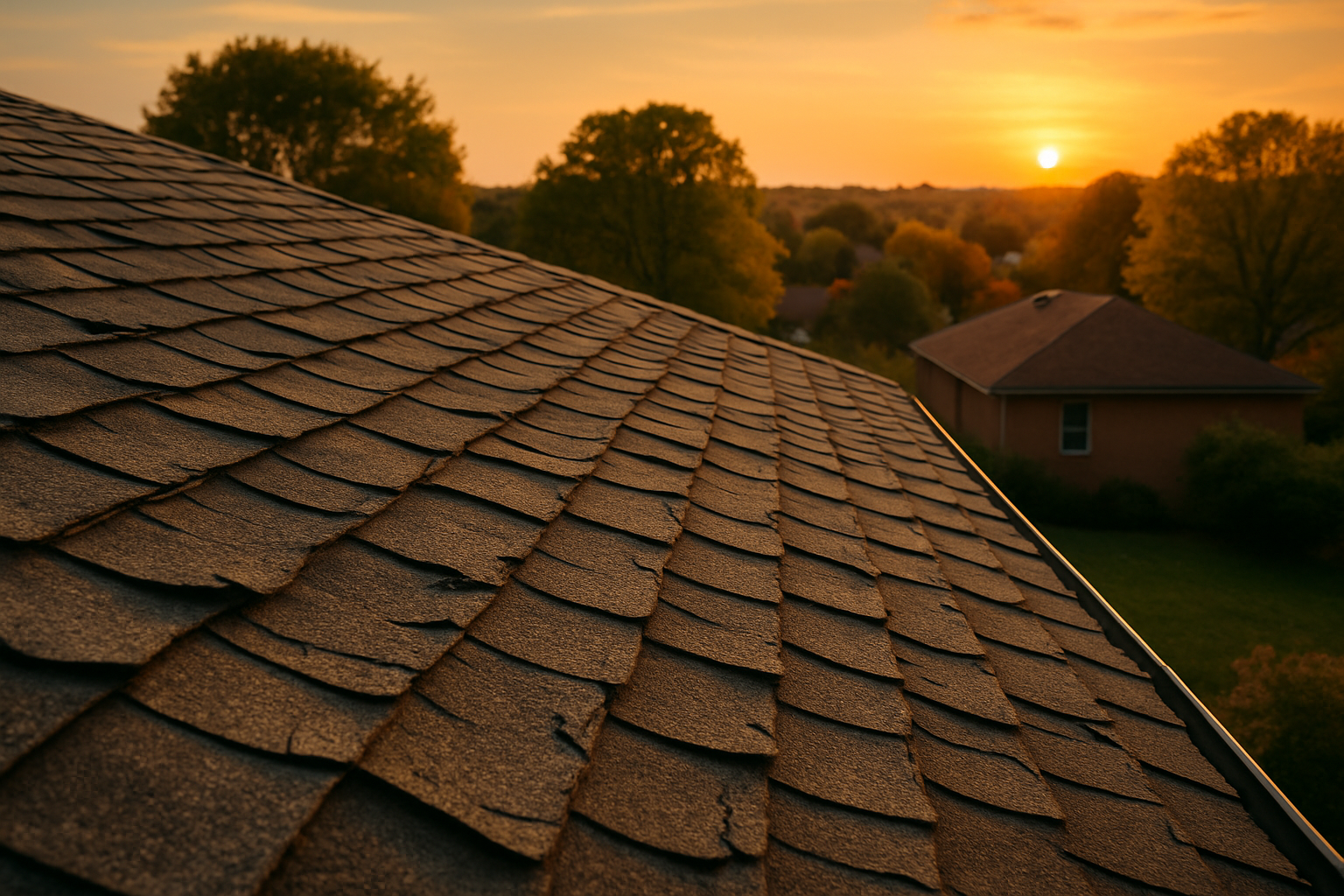
Shingles can loosen, curl, or detach when hit with sustained wind gusts. Water can infiltrate beneath loosened shingles, leading to hidden underlayment rot.
2. Tile Roofs (Clay or Concrete)
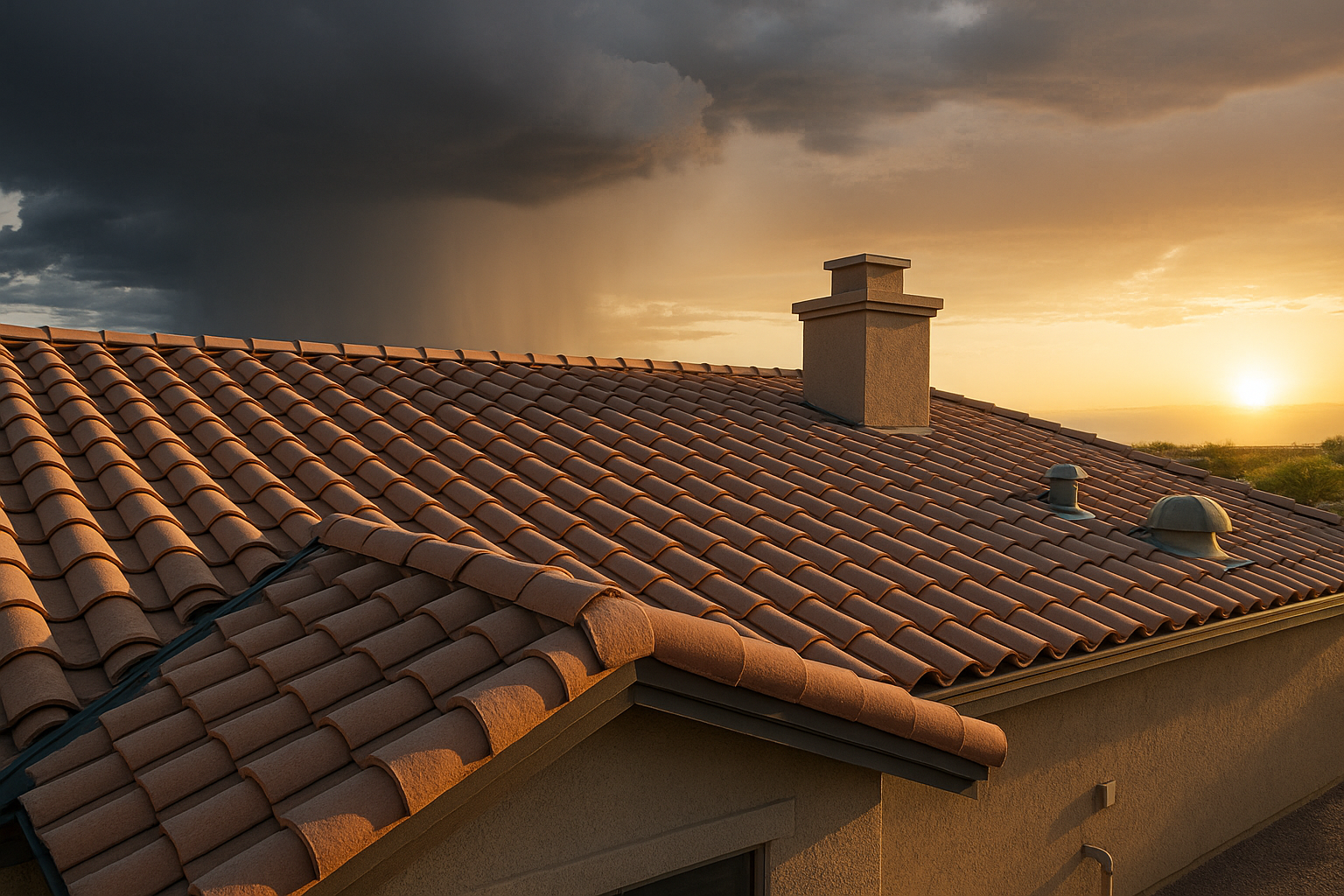
Arizona’s signature roofing style is beautiful but not immune to weather stress. Wind-driven rain and debris can shift or crack tiles, especially at the eaves and ridgelines. Loose tiles often go unnoticed until leaks appear weeks later.
3. Flat Roofs
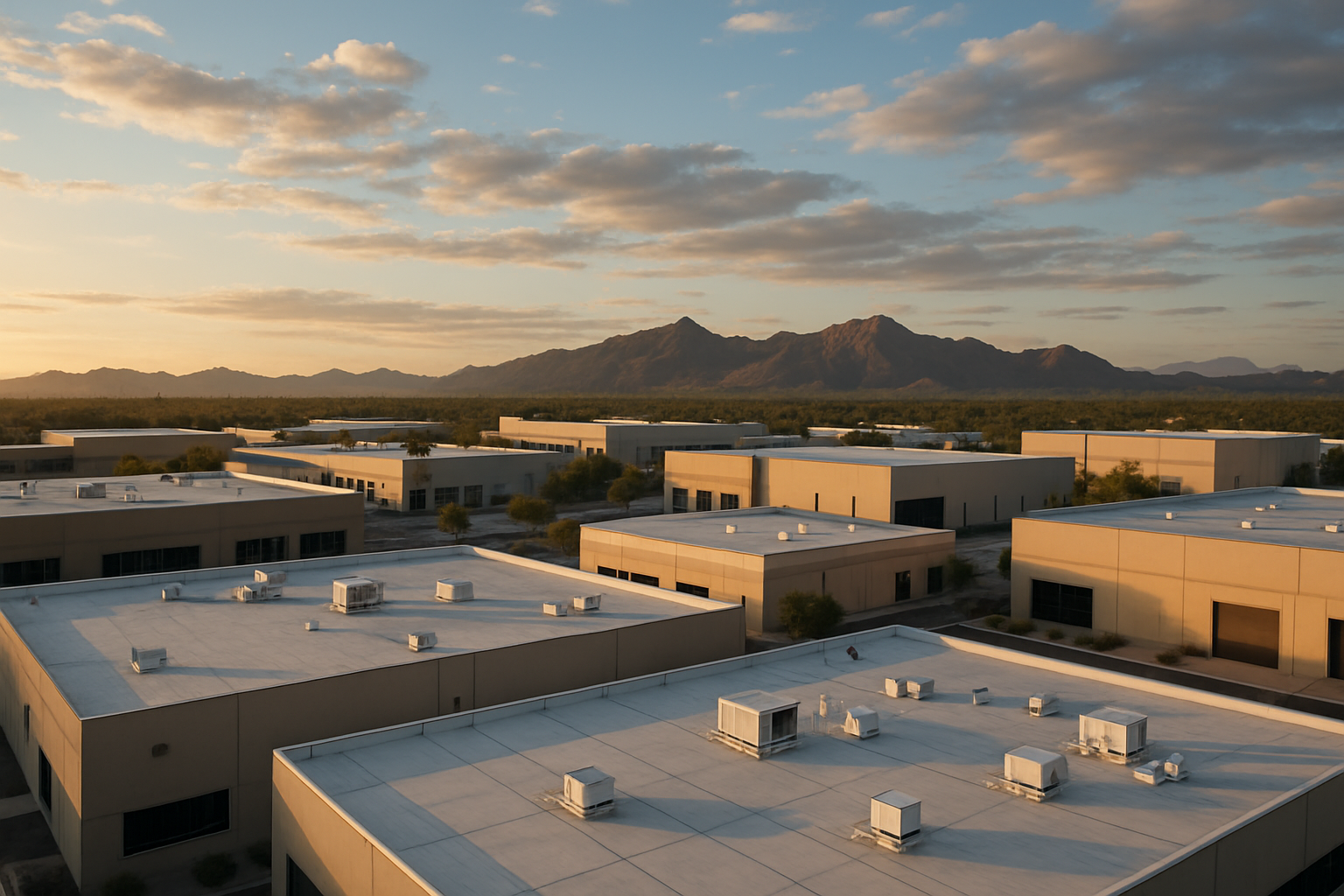
Common on older or modern homes, flat roofs struggle most with drainage issues. Clogged scuppers or parapet drains create standing water, which accelerates membrane blistering and UV deterioration.
4. Metal Roofs
Though durable, metal roofing in Arizona can expand and contract dramatically under heat. Without proper fasteners and flashing maintenance, monsoon rain can penetrate through micro-gaps in seams.
5. Skylights and Flashings
The weakest points on many roofs. Storm winds can loosen flashing seals, allowing moisture to seep into attic spaces — a common cause of mold and insulation damage.
Post-Monsoon Roof Damage You Might Not Notice
When the rains stop and the skies clear, many homeowners assume their roof “survived.” Unfortunately, that’s when hidden damage begins its silent work.
1. UV Damage After the Storm
Post-monsoon sunlight in Arizona is brutal. Once moisture evaporates, the sun’s UV rays intensify existing cracks, warp sealants, and cause tile discoloration or brittleness.
2. Thermal Cracking
The sudden drop from daytime to nighttime temperatures (often 30°F difference) stresses tiles, asphalt, and underlayment — especially if the roof is already weathered. You might notice hairline fractures or popped nails over time.
3. Loosened Tiles and Flashing
Wind uplift during storms can cause tiles to shift slightly — barely noticeable but enough to break the waterproof barrier. Once the seal is compromised, each rain event makes the problem worse.
4. Underlayment Saturation
Beneath every roof lies underlayment — the true waterproof layer. If water has seeped in during the monsoon, it can dry improperly, leading to mold, odor, and premature breakdown.
5. Hidden Structural Damage
When leaks occur near trusses or joists, it may take months for signs (like ceiling stains) to appear. That’s why post-monsoon inspections are essential — early detection prevents massive reconstruction later.
The Reimagine Roofing Post-Monsoon Inspection Checklist
At Reimagine Roofing, we understand Arizona’s roofs better than anyone — because we live and work here too. After every monsoon season, our inspection process focuses on detecting the hidden aftermath of storm damage.
Our Certified Inspectors Examine:
✅ Tile integrity – check for cracks, missing or displaced tiles.
✅ Underlayment condition – identify rot, punctures, or water trails.
✅ Flashing and vent seals – ensure they’re watertight post-storm.
✅ Gutter and drainage systems – confirm free flow and no standing water.
✅ Attic and ceiling moisture – inspect for damp insulation or odor.
✅ Thermal and UV wear – use infrared scans to detect heat-stressed areas.
After inspection, we provide a photo-documented report showing:
- What was damaged
- The likely cause (wind, rain, or UV)
- Recommended repairs and upgrades
- A clear, no-obligation estimate
The Power of Prevention — Why Fall Is the Best Time for Roof Care
Fall in Arizona is a narrow but perfect window for roofing work. The weather cools, rains subside, and materials cure faster — making it the ideal time to schedule repairs or replacements.
Here’s why you shouldn’t wait until winter:
- Lower demand = faster scheduling and lower prices.
- Catch issues early before small cracks become full leaks.
- Prepare for cold-season storms (yes, Arizona still gets them).
- Improve home insulation ahead of cooler nights.
By taking advantage of Reimagine Roofing’s post-monsoon roof inspection in Phoenix, you ensure your roof stays strong, safe, and energy-efficient year-round.
How Heat and UV Affect Roof Longevity in Arizona
Arizona roofs experience over 300 days of sunlight each year — far more than the national average. That constant exposure gradually degrades roofing materials even outside of monsoon season.
The Long-Term UV Impact:
- Asphalt shingles lose granules faster.
- Tiles fade, crack, or flake.
- Sealants dry out, leading to flashing leaks.
- Underlayment membranes lose flexibility and tear under stress.
Without consistent maintenance, even high-quality roofs can lose 10–15 years of expected lifespan due to the combination of UV and monsoon stress. That’s why Reimagine Roofing promotes seasonal inspections twice per year — once in spring (before monsoon) and once in fall (after).
The Hidden Connection Between Roof Health and Energy Efficiency
Here’s a fact many Arizona homeowners overlook:
A well-maintained roof isn’t just about protection — it’s your first line of defense against rising energy costs.
When roofing materials crack or warp, they allow heat transfer into your attic. That forces your HVAC system to work harder, driving up summer cooling bills.
Benefits of Roof Maintenance:
- Lower attic temperatures by up to 20°F.
- Reduce cooling energy use by 10–15%.
- Improve overall comfort during heatwaves.
With energy prices still climbing, a roof check this fall can literally pay for itself through improved efficiency and fewer repairs down the road.
Modern Roofing Upgrades for Arizona Homes
If your roof is more than 15 years old, you might be missing out on today’s monsoon-resistant materials. Reimagine Roofing offers upgrades tailored for Arizona’s climate:
Cool Roof Coatings
Reflect sunlight and reduce surface temperature by up to 50°F.
Advanced Underlayments
High-temp rated and self-sealing — resist UV and water better than traditional felt.
Lightweight Concrete Tiles
Provide thermal mass without the weight of older clay styles.
Reinforced Flashing Systems
Engineered to handle high winds and pressure changes.
By combining these technologies, Arizona homeowners can now achieve decades of durability with minimal upkeep — a game-changer for long-term savings and peace of mind.
The Cost of Ignoring Post-Monsoon Roof Damage
Some homeowners put off inspections thinking, “It doesn’t look that bad.” But monsoon damage often works slowly — much like a hidden leak inside your walls.
Typical Repair Costs (if delayed):
| Damage Type | Early Fix | After 6 Months | After 1 Year |
|---|---|---|---|
| Loose or cracked tiles | $250–$500 | $800–$1,500 | $2,000+ |
| Underlayment damage | $500–$1,200 | $2,000+ | Full roof replacement |
| Flashing or vent leaks | $200 | $700 | Mold remediation ($3,000+) |
A simple inspection can prevent these escalating costs — and Reimagine Roofing offers free, no-pressure assessments to make it easy for Arizona homeowners to act early.
What Homeowners Can Do Right Now
Here’s your post-monsoon roof maintenance checklist you can start today — even before scheduling a professional inspection:
- Look for displaced tiles or shingles around eaves and valleys.
- Clean gutters and scuppers to prevent standing water.
- Check attic spaces for damp insulation or musty smells.
- Inspect ceiling corners for new stains or soft spots.
- Trim overhanging branches to reduce debris buildup.
- Schedule a professional inspection for anything suspicious.
Why Arizona Homeowners Trust Reimagine Roofing
Reimagine Roofing has become Arizona’s go-to expert for post-storm roof care because we focus on long-term protection — not quick fixes.
Our Promise:
- Comprehensive inspections using infrared and drone technology.
- Transparent pricing — no hidden costs, no upselling.
- Lifetime workmanship warranties on all repairs and replacements.
- Local expertise — we understand Arizona’s unique weather cycles.
Whether your roof is tile, shingle, flat, or metal, our team ensures it’s ready to face whatever the desert skies bring next.
Protect Your Home Before It’s Too Late
Monsoon season may be over — but the damage it left behind isn’t. Don’t wait until the next rain exposes a leak.
Schedule your free post-monsoon roof inspection today with Reimagine Roofing.
Our certified Arizona team will assess your roof’s condition, detect hidden damage, and give you a plan to restore it to peak performance — fast.
Use Fast Quote Tool to get your quote in less than 24 hrs for a same-day inspection in Phoenix, Scottsdale, Mesa, or anywhere in Arizona.
Because when it comes to protecting your home… a healthy roof means a worry-free winter.
Popular Posts