Flat Roof Failures in New Mexico Homes and How to Fix It
Flat Roof Failures in New Mexico Homes and How to Fix It
Membrane Cracking: A Common Cause of Flat Roof Failures in New Mexico Homes and How to Fix It
Flat roofs are a common architectural feature across New Mexico, especially in Southwestern, Pueblo-style, mid-century modern, and contemporary homes. They are practical, cost-effective, and visually aligned with the region’s design heritage. However, flat roofs in New Mexico—and neighboring Arizona, which shares similar architectural styles and environmental challenges—face a unique combination of environmental stresses that can cause them to fail far earlier than homeowners expect.
Extreme UV exposure, dramatic day-to-night temperature swings, seasonal monsoon rains, and persistent high winds create conditions where flat roofing systems are constantly under stress. When issues such as ponding water, membrane cracking, and UV deterioration are not addressed early, they can escalate quickly into leaks, structural damage, and costly replacements.
This comprehensive guide explains why flat roofs fail in New Mexico, the most common problems homeowners encounter, how to recognize early warning signs, and what long-term solutions actually work in desert climates. If you own a flat-roof home in New Mexico—or are considering one—this guide is essential reading.
Why Flat Roofs Are Popular In New Mexico
Flat roofs have long been favored in New Mexico for both aesthetic and practical reasons. In addition to their popularity in homes, flat roofs are also widely used in commercial buildings throughout the state.
They offer:
- Clean architectural lines
- Compatibility with adobe and stucco construction
- Ease of access for maintenance
- Space for solar panels and HVAC equipment
- Lower initial installation costs compared to steep-slope roofs
However, while flat roofs are well-suited to the Southwest, they must be designed, installed, and maintained specifically for New Mexico’s climate. When they are not, failures occur faster and more frequently than homeowners anticipate.
Understanding How Flat Roofs Actually Work
Despite the name, flat roofs are never truly flat. They are built with a slight slope—typically one-quarter inch per foot—to direct water toward drains or scuppers.
A flat roof system generally includes:
- Structural roof deck
- Insulation
- Waterproof membrane (such as TPO, modified bitumen, or built-up roofing)
- Flashing at edges, penetrations, and transitions
- Drainage components
When any part of this system underperforms, the entire roof becomes vulnerable. Weaknesses in the system can allow cracks or openings to form in the membrane or seams.
Why New Mexico Is Hard On Flat Roof Systems
New Mexico’s climate creates a perfect storm for flat roof deterioration.
Key stress factors include:
- Intense UV radiation that breaks down roofing materials.
- Large temperature swings causing expansion and contraction.
- Low annual rainfall, but occasional heavy downpours that test waterproofing.
- High winds that can lift or damage roofing layers and deposit dust and debris.
- Many flat roofs rely entirely on their membrane for waterproofing. Wind can also deposit vegetation on flat roofs, increasing the need for regular maintenance.
Intense UV Radiation
High elevation and clear skies expose roofing membranes to constant ultraviolet damage.
Extreme Temperature Swings
Daytime heat followed by cool desert nights causes continuous expansion and contraction.
Monsoon Rainfall
Sudden, heavy rain overwhelms poorly sloped or obstructed drainage systems.
High Winds
Persistent winds lift membrane edges and stress seams and flashing.
Low Humidity Followed By Sudden Moisture
Materials dry out, then rapidly absorb moisture during storms, accelerating cracking.
These conditions are unforgiving—especially for flat roofs that rely entirely on their membrane for waterproofing.
The Importance Of Proper Flat Roof Installation
Proper flat roof installation is the foundation of a reliable and long-lasting roofing system, especially in New Mexico’s challenging climate. The combination of intense sun exposure, sudden storm damage, and temperature extremes means that every detail of the installation process matters. Roofing experts in Albuquerque, Santa Fe, and across the state stress that quality workmanship and strict adherence to local building codes are non-negotiable for a roof that will truly protect your property.
In the roofing industry, it’s well known that the vast majority of roof repairs stem from poor installation or inadequate routine maintenance. When a flat roof is installed correctly, using the right materials and techniques for New Mexico’s unique environment, it can withstand the elements and prevent costly repairs down the line. This includes ensuring proper drainage, secure flashing, and a seamless membrane—all of which are critical to avoiding leaks, mold, and bigger problems that can threaten your building’s integrity.
Routine maintenance remains essential, but it all starts with a quality installation. Homeowners and businesses who invest in experienced roofing professionals benefit from a roofing system that not only meets but exceeds local standards. The result is a roof that delivers lasting protection, preserves property value, and offers peace of mind—no matter what the New Mexico weather brings.
Ponding Water: The Most Common Flat Roof Problem In New Mexico
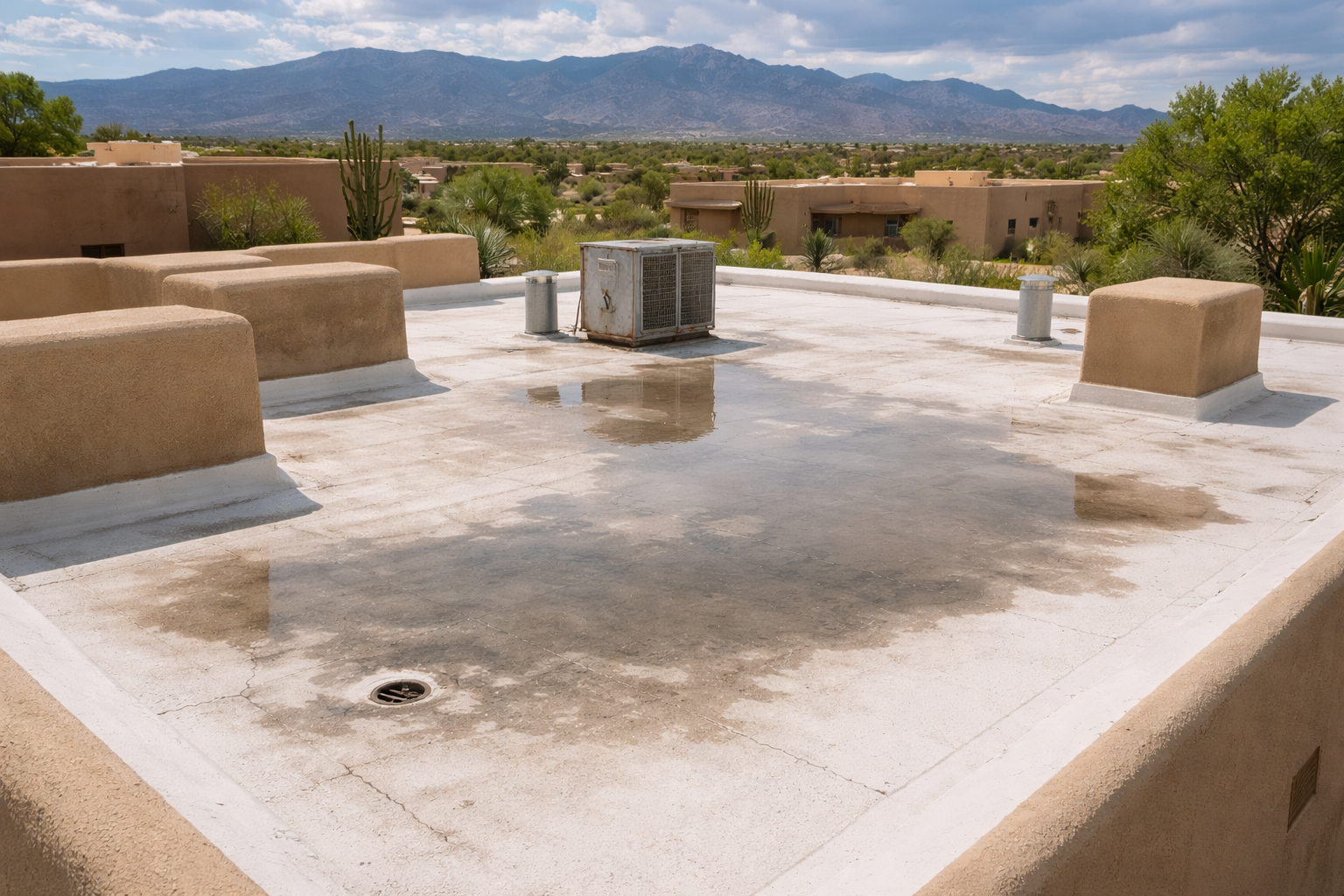
Ponding water occurs when water remains on the roof surface for more than 48 hours after rainfall. While New Mexico is known for its dry climate, monsoon storms can dump large volumes of water in a short time. The presence of standing water for extended periods is a clear sign of drainage problems.
Why Ponding Happens On Flat Roofs
Common causes include:
- Inadequate roof slope
- Settling of the structure over time
- Compressed or degraded insulation
- Blocked drains or scuppers
- Poor original roof design
- Debris buildup from dust and wind
It is important to regularly inspect flat roofs to identify these issues early and prevent them from worsening.
Even small depressions can trap water.
Why Ponding Water Is Dangerous
Standing water accelerates every other failure mode:
- UV damage intensifies when sunlight reflects off water
- Membranes soften and weaken
- Seams are stressed continuously
- Dirt and debris accumulate
- Algae and microbial growth can begin; for example, stagnant water provides an ideal environment for algae to thrive
Over time, ponding leads to membrane breakdown and leaks.
Signs Of Ponding Water Issues
Homeowners should watch for:
- Water stains or rings on the roof surface
- Sagging areas
- Soft spots underfoot
- Interior ceiling discoloration
- Recurrent leaks after storms
If water ponds repeatedly, the roof is already compromised.
How Ponding Water Is Fixed
Effective solutions include:
- Adding tapered insulation to improve drainage
- Installing additional drains or scuppers
- Correcting slope issues during re-roofing
- Clearing and maintaining drainage paths regularly
Addressing ponding water should be a top priority to prevent further roof damage.
Temporary fixes rarely last. Long-term solutions require addressing slope and drainage design.
Membrane Cracking: A Desert Climate Problem
Flat roof membranes are designed to be flexible, but New Mexico’s temperature extremes push materials beyond their comfort zone.
What Causes Membrane Cracking
Cracking is commonly caused by:
- Daily thermal expansion and contraction
- UV degradation drying out materials
- Aging membranes losing elasticity
- Improper installation
- Low-quality materials not rated for desert climates
As membranes lose flexibility, they become brittle and prone to splitting. When membrane cracking is widespread, replacing the membrane is often necessary to restore roof integrity.
Why Cracks Lead To Major Leaks
Even hairline cracks allow:
- Water intrusion into insulation
- Moisture to travel laterally under the membrane
- Saturation of roof decking
- Mold growth
- Structural deterioration
By the time leaks appear inside the home, damage is often extensive. Cracks undermine the roof’s integrity, so timely repairs are essential to maintain structural soundness and prevent further issues.
Common Locations For Membrane Cracks
Cracking typically occurs at:
- Seams
- Roof edges
- Around HVAC units
- At flashing transitions
- Over structural joints
These areas experience the most movement and stress.
How Membrane Cracking Is Repaired Or Prevented
Minor cracking may be addressed with:
- Professional membrane repairs
- Reinforced patching systems
However, widespread cracking usually indicates the membrane has reached the end of its service life.
Prevention depends on:
- Choosing heat- and UV-resistant membranes
- Proper installation techniques
- Regular inspections
UV Deterioration: The Silent Roof Killer In New Mexico
UV radiation is one of the most destructive forces affecting flat roofs in New Mexico.
How UV Exposure Damages Flat Roofs
Over time, UV rays:
- Break down polymer chains in membranes
- Cause chalking and surface erosion
- Dry out oils that keep materials flexible
- Fade protective coatings
- Increase brittleness
This process happens gradually, making it easy to overlook until failure occurs.
Why UV Damage Is Worse In New Mexico
Factors that intensify UV exposure include:
- High elevation
- Clear skies
- Low atmospheric moisture
- Long hours of direct sunlight
Flat roofs absorb UV continuously, unlike sloped roofs where sunlight angle varies.
Signs Of UV Deterioration
Watch for:
- Discoloration
- Surface cracking
- Peeling coatings
- Powdery residue
- Exposed reinforcement layers
Once UV damage is advanced, repairs become limited.
How UV Damage Is Mitigated
Effective UV protection strategies include:
- Reflective membranes
- UV-resistant coatings
- Proper material selection for desert climates
- Routine inspections
Coatings can extend roof life, but only when applied before significant deterioration occurs.
Roof Coating And Protection: Shielding Your Flat Roof
Roof coating and protection are essential strategies for extending the life of flat roofs in New Mexico. A professionally applied roof coating acts as a barrier against the region’s harsh elements, including relentless sun, sudden downpours, and the risk of storm damage. In the roofing services industry, experts recommend regular inspections and timely application of roof coatings to prevent cracks, leaks, and other issues that can lead to costly repairs.
A high-quality roof coating not only enhances the durability of your roofing system but also helps prevent ponding water—a common challenge for flat roofs in areas like Rio Rancho and Albuquerque. By creating a seamless, waterproof membrane, roof coatings protect your property from water intrusion, reduce the risk of mold, and maintain the roof’s integrity over time.
Whether you’re installing a new roof or looking to extend the life of an existing one, investing in roof coating solutions is a smart move. Roofing experts in New Mexico offer a range of options tailored to local conditions, ensuring your flat roof remains resilient and reliable. With the right expertise and materials, a well-coated flat roof can withstand the elements, minimize the risk of leaks and cracks, and provide lasting value for homeowners and businesses alike.
Other Common Flat Roof Issues In New Mexico Homes
While ponding, cracking, and UV damage are the most common, other issues often contribute to failure. It is important to select a reputable business with proven experience in addressing flat roof issues to ensure quality repairs and long-term performance.
Flashing Failures
High winds and temperature swings loosen flashing around:
- Parapet walls
- Skylights
- Vents
- HVAC penetrations
Failed flashing is a leading cause of leaks.
Drainage Blockages
Dust, sand, and debris accumulate quickly in New Mexico, blocking drains and scuppers.
Improper Repairs
Temporary patches using incompatible materials often accelerate damage instead of fixing it.
Poor Insulation Performance
Compressed or waterlogged insulation reduces energy efficiency and increases membrane stress.
Repair Vs. Replacement: Making The Right Decision
Not every flat roof problem requires full replacement—but many do. Every repair or replacement should be approached as a well-managed project to ensure quality results.
When Flat Roof Repairs Make Sense
Repairs may be appropriate when:
- Damage is localized
- Membrane is still flexible
- Roof is relatively young
- Insulation and decking are dry
When Replacement Is The Better Option
Replacement is often necessary when:
- Ponding water is widespread
- Cracking occurs across multiple areas
- UV damage is extensive
- Insulation is saturated
- The roof is nearing the end of its expected lifespan
Delaying replacement often leads to higher costs later.
Best Flat Roofing Materials For New Mexico Homes
Material selection is critical in desert climates.
High-performing options include:
- TPO membranes with strong UV resistance
- Modified bitumen systems rated for heat
- High-reflectivity coatings
Each system must be installed with climate-specific details to succeed long-term.
Preventative Maintenance: The Key To Flat Roof Longevity
Flat roofs require more proactive maintenance than sloped roofs.
Best practices include:
- Semi-annual inspections
- Drainage cleaning
- Prompt repair of minor damage
- UV coating maintenance
- Professional evaluations after monsoon season
A skilled team can provide thorough inspections and maintenance to help extend your roof’s lifespan.
Preventative care significantly extends roof lifespan.
The Long-Term Cost Of Ignoring Flat Roof Problems
Ignoring early warning signs often leads to:
- Interior water damage
- Mold remediation
- Structural repairs
- Higher energy bills
- Emergency replacements
Many roofing businesses offer flexible pay options and payment plans to help homeowners manage the cost of repairs or replacements.
Planned maintenance and timely replacement are always more cost-effective.
Final Thoughts: Flat Roofs Can Thrive In New Mexico—With The Right Approach
Flat roofs are not inherently problematic. In fact, when designed and maintained properly, they perform exceptionally well in New Mexico.
The key is understanding:
- How desert conditions affect roofing materials
- Why ponding, cracking, and UV damage occur
- When repairs are sufficient—and when they are not
Informed homeowners protect their investment by acting early and choosing experienced roofing professionals. The benefits of proactive maintenance and timely repairs include extending the lifespan of your flat roof, reducing long-term costs, and preventing major issues like membrane cracking before they start.
Get A Free Flat Roof Evaluation From Reimagine Roofing
If your New Mexico home has a flat roof, don’t wait for leaks to signal a problem. Reimagine Roofing offers a Free Flat Roof Evaluation designed specifically for desert climates.
Our evaluation includes:
- Drainage and slope assessment
- Membrane condition analysis
- UV damage inspection
- Flashing and penetration review
- Insulation and moisture checks
- Clear recommendations for repair or replacement
Whether you’re in Albuquerque, Santa Fe, Las Cruces, or anywhere in New Mexico, Reimagine Roofing understands the unique challenges flat roofs face in this climate. We are proud to serve the New Mexico community with expert flat roof solutions and a commitment to customer satisfaction.
Schedule Your Free Flat Roof Evaluation With Reimagine Roofing Today
Use our Fast Quote Tool and get your estimates in less than a day
Protect Your Home From The Desert Elements For Years To Come!
Popular Posts