Heat, Ventilation & Energy Efficiency: Radiant Barrier vs Cool Roof vs Metal Roof

Heat, Ventilation & Energy Efficiency: Radiant Barrier vs Cool Roof vs Metal Roof
Which Lowers Temps Most?
If your home feels hot even when the air conditioner is running nonstop, your roof may be working against you.
Homeowners across hot and high-sun regions often focus on HVAC upgrades or higher electricity plans—without realizing that most heat enters the home from above. A standard roof typically allows more heat entering your home compared to advanced options like cool roofs or radiant barrier underlayments, which are designed to block or reflect more of this heat. Your roof and attic are the front line in the battle against heat, and the materials and systems you choose can mean the difference between a comfortable home and one that never cools down.
At Reimagine Roofing, we hear the same question over and over:
“What actually lowers temperatures the most—radiant barriers, cool roofs, or metal roofing?”
The answer isn’t as simple as choosing one product. Real heat reduction depends on:
- How heat enters your home
- How it’s absorbed, reflected, or trapped
- How ventilation moves it back out
In this guide, we’ll break down:
- How heat moves through roofs and attics
- What radiant barriers really do
- How cool roofs work (and their limits)
- Why metal roofs are different
- How ventilation changes everything
- Which option lowers temperatures the most in real homes
- How to choose the right solution for your climate and budget
If lowering attic temps, improving comfort, and cutting cooling costs are your goals—this article will give you clarity on how the right roof and attic system can help create a more energy efficient home.
How Heat Really Enters Your Home
Before comparing solutions, it’s critical to understand how heat actually gets inside.
On a sunny day, here’s what happens:
- The sun’s rays hit your roof, and direct sunlight is a major contributor to attic temperature spikes.
- The roofing material absorbs and transfers heat downward.
- Warm air from inside your home rises into the attic, further increasing attic temperatures.
- The attic heats up, and that heat moves into the rest of your house.
Once heat enters the attic, it moves into your living spaces, making cooling more difficult.
The Three Types of Heat Transfer
- Radiant heat – Heat from the sun radiating onto your roof. Radiant heat transfer is the process by which this energy moves from the sun to your roof and into your attic, significantly impacting attic temperatures and overall indoor comfort.
- Conductive heat – Heat moving through roofing materials into the attic. Insulation with higher thermal resistance (R-value) can help slow down this heat movement, improving energy efficiency and keeping indoor spaces cooler.
- Convective heat – Hot air trapped in the attic transferring heat downward
Most homeowners underestimate radiant heat—but it’s the biggest driver of attic temperature spikes.
On a sunny day:
- Roof surfaces can reach 160–190°F; roof temperature is a key factor in how much heat is transferred into the attic.
- Attic temps can exceed 140–150°F
- That heat pushes into living space all day long
Once heat enters the attic, it’s extremely hard to remove without the right system.
Why Attic Heat Matters So Much
Hot attics cause more than discomfort.
They:
- Overwork HVAC systems
- Increase energy bills
- Lead to higher energy bills and increased energy costs
- Shorten roof lifespan
- Dry out shingles and underlayment
- Increase thermal cycling
- Create hot spots in living areas
Excessive attic heat can make it harder to keep your home cooler in summer and your home warm in winter, reducing indoor comfort and driving up energy costs.
Lower attic temperatures = lower indoor temperatures.
That’s why roof-level solutions are so powerful—they help create a more energy efficient home and improve indoor comfort.
Option 1: Radiant Barriers — How They Work
Radiant barriers consist of reflective materials, typically aluminum foil, installed in attics to reflect radiant heat away from the living space. These barriers work by reflecting sunlight and reducing heat transfer, helping to keep the home cooler, especially in hot climates. Radiant barriers are a type of reflective insulation used to improve attic energy performance.
What Radiant Barriers Do Well
Radiant barriers:
- Reflect radiant heat before it enters insulation
- Reduce attic heat gain from sunlight
- Reduce heat gain in the attic, helping to keep indoor spaces cooler
- Lower attic temps by 10–30°F (depending on conditions), and when properly installed, can significantly reduce attic temperatures for improved comfort and energy efficiency
- Their effectiveness is enhanced when there is adequate air space above or below the barrier, which improves thermal efficiency
- Improve comfort during peak sun hours
They’re especially effective in hot, sunny climates.
Where Radiant Barriers Fall Short
Radiant barriers do not stop conductive heat moving through roofing materials. They also:
- Do not cool roof surfaces
- Do not replace ventilation
- Do not work well if dusty or improperly installed
- Have limited impact in humid or cloudy climates
- Can trap moisture if not properly installed or if non-vented materials are used, which may lead to mold growth in the attic
Radiant barriers are passive reflectors, not cooling systems.
Best Use Case for Radiant Barriers
Radiant barriers work best when:
- Homes already have decent ventilation
- Roof materials absorb high heat
- Attic spaces are accessible
- There is sufficient attic space for proper installation
- The climate is hot and sunny
They’re most effective as part of a system, not a standalone fix. For maximum thermal performance, radiant barriers should be combined with additional insulation in the attic space.
Option 2: Cool Roofs — What They Actually Do
Cool roofs are designed to reflect more sunlight and absorb less heat than a standard roof, which typically absorbs more solar energy and transfers more heat into the building.
They achieve this through:
- Lighter colors
- Reflective granules
- Special coatings
- Reflective coating
- Higher solar reflectance ratings
Cool roofs are a type of reflective roofing materials specifically engineered to improve energy efficiency by bouncing back sunlight and keeping homes cooler.
How Cool Roofs Reduce Heat
Cool roofs:
- Reflect more solar radiation
- Reflect solar heat to reduce the amount of heat entering the attic
- Lower roof surface temperatures
- Reduce heat transfer into the attic
- Improve energy efficiency
In many cases, cool roofs can reduce roof surface temperatures by 20–50°F compared to standard dark shingles.
The Limits of Cool Roof Technology
Cool roofs help—but they’re not magic.
Limitations include:
- Performance decreases as roofs get dirty
- Color choices are limited for maximum effect
- Still rely on proper ventilation
- Still allow conductive heat through materials
- Some cool roof coatings offer water resistance, but may not address issues like ice dams in colder climates
Cool roofs slow heat gain, but they don’t eliminate it.
Best Use Case for Cool Roofs
Cool roofs work well when:
- Homeowners prefer asphalt shingles
- Budgets don’t allow premium materials
- Local codes encourage reflective roofing
- Combined with good attic ventilation
- Homes are located in hot climates, where reducing heat gain is especially important
- Homeowners want options like clay tiles, which provide both durability and reflectivity
They’re a strong middle-ground solution.
Option 3: Metal Roofing — A Different Category Entirely
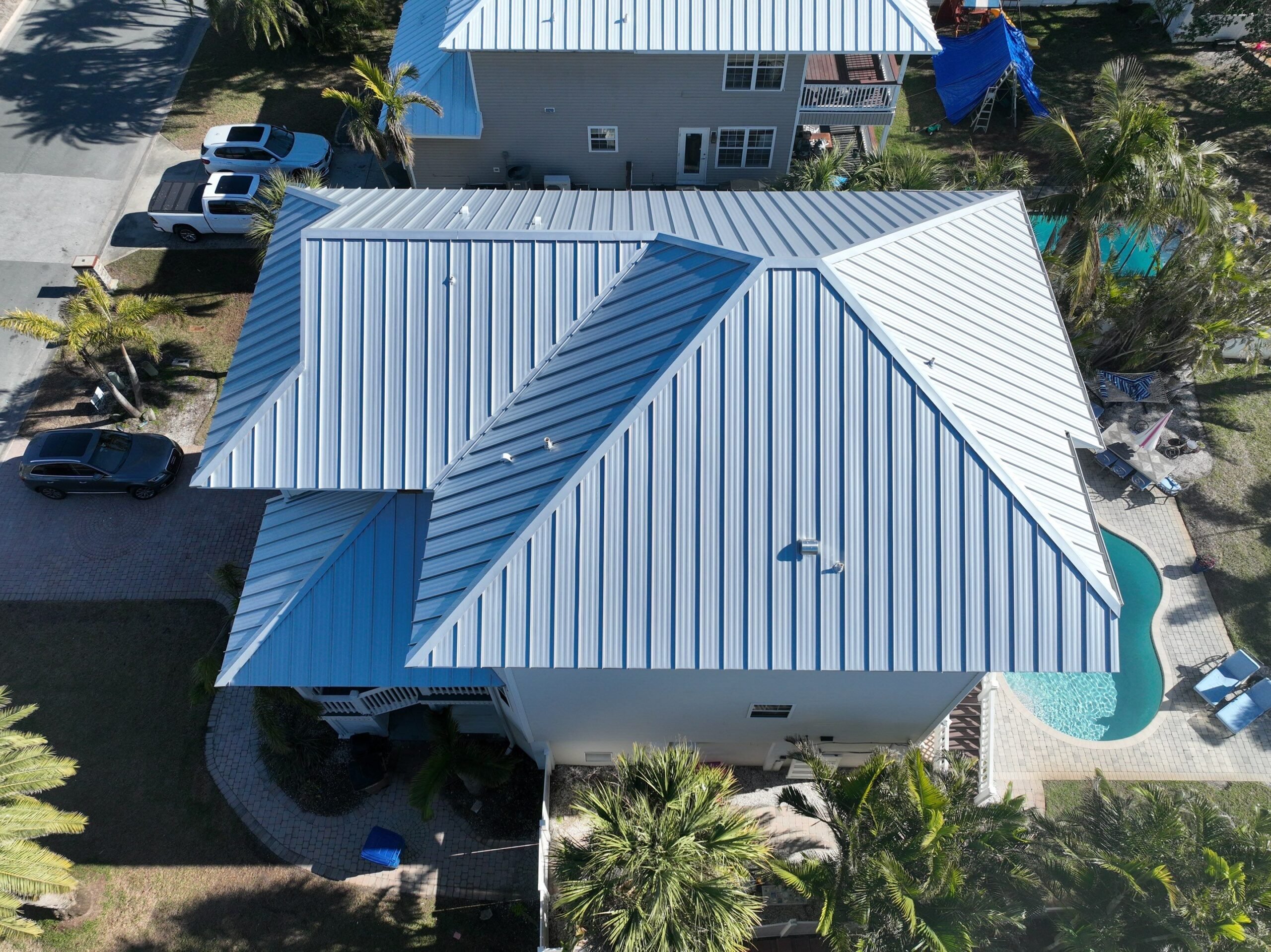
Metal roofs don’t just reflect heat—they change how heat behaves. Compared to a standard roof, metal roofing is more energy efficient because it reflects more sunlight and absorbs less heat, helping to reduce cooling costs and improve overall comfort.
This is where the comparison shifts.
Why Metal Roofing Performs Differently
Metal roofs:
- Reflect solar radiation efficiently, reducing the amount of solar heat transferred into the attic
- Cool quickly once the sun sets
- Create an air gap between panels and decking, and this air space enhances heat reflection and improves thermal efficiency
- Shed heat faster than asphalt
- Don’t store heat like shingles do
Unlike shingles, metal doesn’t absorb and retain heat—it releases it.
Metal Roofing + Ventilation = Major Heat Reduction
When paired with:
- Proper ventilation
- Reflective finishes
- Radiant barriers (optional)
- Solar powered attic fans (for energy-efficient attic ventilation)
- Extra vents (to further improve airflow and reduce attic temperatures)
Metal roofing can reduce attic temperatures by 30–50°F or more compared to traditional shingle roofs.
That’s not incremental—that’s transformational.
Additional Energy Benefits of Metal Roofing
Metal roofs also:
- Reduce cooling load
- Improve HVAC efficiency
- Lower peak indoor temperatures
- Help save energy by reducing the burden on your cooling system
- Work even better when paired with proper attic insulation, maximizing energy savings and indoor comfort
- Last 40–70 years
- Resist UV degradation
- Perform well in extreme climates
From an energy standpoint, metal roofing is in a different class.
Ventilation: The Multiplier Most Homes Are Missing
No heat-reduction solution works properly without ventilation. The goal of proper attic ventilation is to keep attic temperatures only slightly higher than the outside air, which helps prevent heat buildup. With effective ventilation, a hot attic can be transformed into an attic cooler, improving overall home comfort.
What Ventilation Does
Ventilation:
- Removes trapped hot air
- Brings in cooler air from outside and expels warm air from the attic
- Reduces attic pressure
- Lowers shingle temperatures
- Extends roof lifespan
- Improves insulation performance
Poor ventilation can cancel out the benefits of radiant barriers, cool roofs, and metal roofing.
Types of Ventilation That Matter
- Ridge vents
- Soffit vents
- Gable vents
- Powered attic fans (in some cases), including solar fans as an energy-efficient option that uses solar power for automatic operation and easy installation
Balanced intake and exhaust ventilation is critical.
Head-to-Head Comparison: Which Lowers Temps Most?
Let’s compare real-world performance.
Radiant Barrier
- Attic temp reduction: 10–30°F
- Best for: supplemental heat control
- Works alone? ❌
- Cost: low–moderate
Cool Roof
- Roof surface reduction: 20–50°F
- Attic temp reduction: 10–25°F
- Works alone? ⚠️
- Cost: moderate
Metal Roof
- Attic temp reduction: 30–50°F+
- Works alone? ⚠️ (best with ventilation)
- Cost: higher upfront, lower long-term
Winner for maximum heat reduction:
👉 Metal roofing with proper ventilation
Why “One Upgrade” Rarely Solves Heat Problems
Most homes struggle with heat because:
- Roof materials absorb heat
- Attics trap it
- Ventilation can’t remove it fast enough
The best results come from layered solutions, not single products. Addressing both heat loss in winter and radiant heat transfer in summer is essential for maintaining year-round comfort and energy efficiency.
The Best Heat-Reduction Strategy (By Priority)
- Fix ventilation first
Focusing on the attic space is critical for maximizing heat reduction. Proper ventilation in the attic space helps regulate temperature, reduces heat buildup, and prevents moisture problems.
- Choose reflective or heat-shedding roof materials
- Using cool roof or metal roof materials can further reduce heat transfer into the attic space.
- Add radiant barriers if needed
- Radiant barriers in the attic space can reflect radiant heat away, lowering attic temperatures.
- Seal attic air leaks
- Sealing air leaks in the attic space prevents hot air from entering and conditioned air from escaping, which helps your air conditioning system work more efficiently and reduces energy costs.
Skipping step one limits everything else.
Cost vs Value: What Makes Sense Long-Term?
Radiant barriers and cool roofs are lower-cost improvements. Metal roofing costs more—but delivers:
- Longer lifespan
- Greater heat reduction
- Lower maintenance
- Better ROI over decades
Investing in better roofing and ventilation can significantly reduce long-term energy costs, making these upgrades even more valuable over time.
For homeowners staying long-term, metal roofing often pays for itself in comfort and durability, even before energy savings.
Signs Your Roof Is Making Your Home Hotter
- Rooms that never cool down
- AC running constantly
- High summer energy bills
- Hot ceilings
- Uneven indoor temperatures
- Attic feels unbearable
- High roof temperature and heat buildup in the attic, indicating poor roof performance and insufficient ventilation
These are roof and ventilation problems—not HVAC failures.
Why Reimagine Roofing Takes a System-Based Approach
At Reimagine Roofing, we don’t sell products—we solve heat problems.
We evaluate:
- Roof material performance
- Attic temperatures
- Ventilation balance
- Insulation interaction
- Attic insulation and its thermal resistance (R-value)
- Long-term energy goals
Then we recommend what actually works for your home and climate.
Which Lowers Temps Most?
If your goal is maximum heat reduction:
- Radiant barriers help
- Cool roofs slow heat gain
- Metal roofing + ventilation delivers the biggest impact
The right combination of these solutions can significantly reduce attic temperatures and save energy by lowering cooling costs and improving home comfort.
The best solution depends on your roof, your attic, and how long you plan to stay—but ignoring the roof itself is the biggest mistake homeowners make.
Schedule Your FREE Heat & Ventilation Roof Assessment
If your home struggles with heat, guessing can be expensive.
👉 Get a FREE Roof & Attic Inspection from Reimagine Roofing
We’ll evaluate ventilation, roof materials, and energy performance—honestly and clearly.
- No pressure
- No obligation
- Energy-focused expertise
- Fast quotes and estimates—often in under 24 hours
Reimagine a roof that works with the heat—not against you.
Popular Posts