Impact Windows vs. Standard Windows: What’s Required and What’s Optional?
Impact Windows vs. Standard Windows: What’s Required and What’s Optional?
Impact Windows vs. Standard Windows: What’s Required and What’s Optional?
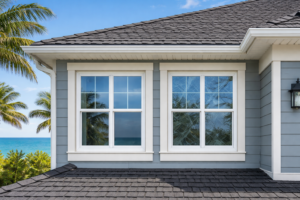
If you’re researching new windows, you’ve probably run into the “impact vs. standard” question fast—especially if you live in a coastal area, a storm zone, or a place that sees high winds. Impact windows can sound like the obvious upgrade… until you see the price tag. Standard windows can look like a bargain… until you start wondering what’s actually required where you live, what your insurance company expects, and whether you’re risking costly damage.
This guide breaks it all down in plain English: what impact windows are, how they compare to standard windows, what may be legally required, what’s optional, and how to choose the right solution for your home and budget. We’ll also cover wind ratings, building codes, common myths, and the options homeowners often overlook—like partial upgrades or mixed solutions.
At the end, you’ll have a clear path forward—and if you want a pro opinion, you can get one quickly.
Reimagine Construction offers window evaluations and fast quotes. If you’re ready to compare options for your home, schedule a free window consultation and get a detailed estimate—no pressure, just clarity.
What Are Impact Windows?
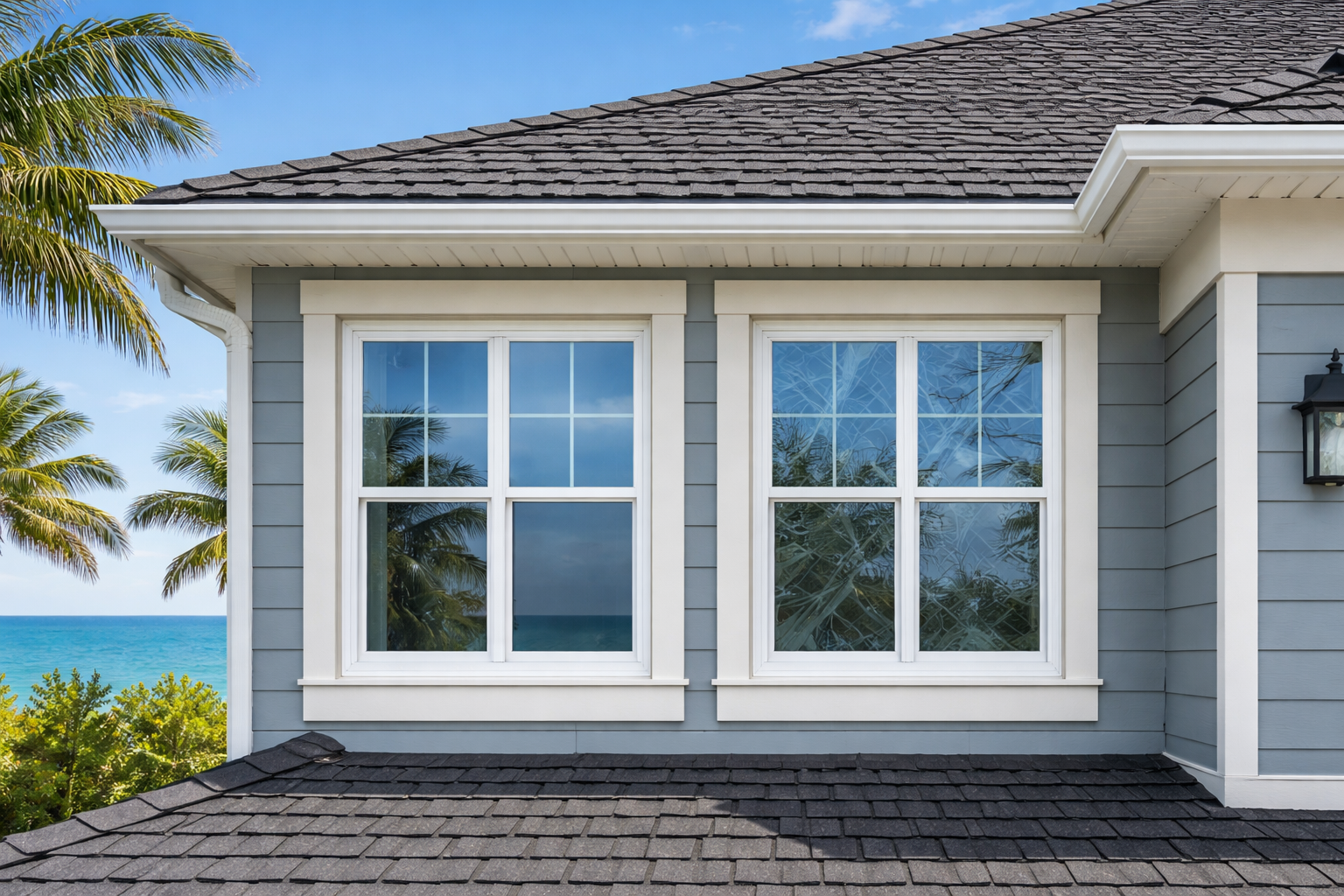
Impact windows (often called hurricane windows) are engineered to withstand high winds and flying debris. They’re not “unbreakable,” but they are designed so that if the glass cracks, the window still stays intact and continues to protect the opening.
Most impact windows use laminated glass, which is similar to a car windshield:
- Two sheets of glass
- A strong inner interlayer (usually PVB or similar)
- When hit, the glass may spider-crack, but the interlayer helps hold everything together
Why that matters: during major storms, a broken window isn’t just a broken window—it can pressurize the house, increase roof uplift, and allow wind-driven rain to pour inside.
Impact windows typically also include:
- Stronger frames
- Reinforced sashes
- Heavy-duty hardware
- More robust anchoring/installation methods
What Are Standard Windows?
Standard windows are the typical windows installed in many homes—often double-pane, sometimes Low-E, and designed primarily for energy efficiency, comfort, and everyday durability.
Standard windows can still be high quality. Many modern options offer:
- Energy-efficient insulated glass
- Low-E coatings to reduce heat gain
- Good seals for air and water resistance
- Decent structural strength
But the major difference is this: standard windows are not specifically designed and certified to withstand debris impact the way impact-rated windows are.
Key Differences: Impact vs. Standard Windows
Impact windows are designed for:
- High wind events
- Debris impact resistance
- Maintaining protection even if the glass cracks
- Enhanced framing and anchoring
Standard windows are designed for:
- Everyday weather
- Energy efficiency
- Comfort and noise reduction (varies by package)
- Affordability
The most practical difference:
Impact windows reduce your need for storm panels or shutters because the window itself becomes the protective barrier.
With standard windows, in storm-prone zones, homeowners often rely on:
- Accordion shutters
- Storm panels
- Fabric systems
- Roll-down shutters
What’s Required and What’s Optional? The Honest Breakdown
Here’s the truth: “Required” depends on your location, your home’s exposure, and the building code in your municipality. But we can still break this into what is commonly mandatory vs. optional.
What may be REQUIRED (depending on your area)
- Wind-rated windows/doors that meet local structural requirements
- Impact protection (either impact windows OR shutters/panels) in designated wind-borne debris regions
- Permit and inspection compliance for replacements (very common)
- Egress requirements for bedrooms (size/opening rules)
- Tempered glass in safety locations (near doors, bathrooms, low-to-floor glass)
What is usually OPTIONAL (but often smart)
- Upgrading from standard to impact-rated windows
- Choosing higher efficiency packages (Low-E, improved U-factor/SHGC)
- Enhanced sound control glass packages
- Upgrading frames (vinyl to fiberglass, etc.)
- Decorative grids, upgraded finishes, premium hardware
- Multi-step water management upgrades beyond minimum code
The simplest way to think about it:
- Code may require a window that meets a wind rating.
- Code may require impact protection.
- That protection can be achieved with impact windows or approved shutters/panels.
- So impact windows are sometimes required, but often they’re an optional path to meeting the protection requirement—just a more convenient and premium one.
Building Codes and Wind Zones: Why “Required” Depends on Where You Live
In many storm-prone regions, codes break locations into categories such as:
- Basic wind speed zones
- Exposure categories (how open/flat/coastal your surroundings are)
- Wind-borne debris regions
- Special high-risk zones near coasts or open water
Even within the same state, requirements can vary by:
- County
- City
- Distance from coastline
- Building height
- Home design and exposure
This is why your neighbor might say “impact windows were required,” while someone a few miles inland says “we didn’t need them.”
A professional evaluation matters because the correct requirements are tied to your specific address and opening types, not a generic rule.
Understanding Ratings: DP, Wind Load, and Impact Certification
Window marketing can be confusing, so here are the ratings that actually matter for “impact vs. standard.”
DP (Design Pressure)
DP rating is one of the most important performance indicators. It relates to how much pressure (from wind) a window can handle.
Higher DP generally means:
- Better wind resistance
- Better structural performance
- Often better water resistance (though not always)
Water and air infiltration ratings
These indicate how well a window resists leaks and drafts. In storms, water resistance matters—even more than most homeowners realize.
Impact certification
This is what distinguishes impact windows:
- Tested to withstand impact from debris
- Then tested for wind cycling afterward (to simulate storm conditions)
Important: Not every “strong window” is impact-certified. It may have a good DP rating, but no impact protection.
Where Impact Windows Are Most Worth It
Even if impact windows aren’t strictly required, they can be a high-value upgrade in the right situations.
1) You’re in a wind-borne debris region
If your area requires impact protection, you’ll need impact windows or shutters/panels anyway. Impact windows can be worth it for convenience and always-on protection.
2) You don’t want shutters or panels
Storm panels are effective but:
- Must be installed every time
- Are heavy and time-consuming
- Require storage space
- Can be a safety issue if you’re away when a storm hits
Impact windows remove that hassle.
3) You’ve experienced water intrusion before
If your home has seen storm leaks, upgrading to higher-performance windows with proper installation and flashing can be a game-changer.
4) You want stronger security
Impact windows can also act as a deterrent against break-ins because laminated glass is harder to breach quickly.
5) You want better noise control
While not automatic, many impact windows provide improved sound performance compared with standard glass.
Where Standard Windows Can Be Enough
Standard windows can be a smart choice when:
- You are outside debris-impact zones
- Your local code does not require impact protection
- You can meet code with wind-rated standard windows
- Your budget is better allocated elsewhere (roofing, insulation, HVAC)
- You already have effective storm protection (shutters) and you’re happy with it
The key is choosing a properly rated standard window—not the cheapest off-the-shelf unit that’s underbuilt for your conditions.
Optional Alternatives to Full Impact Windows (Smart Middle Paths)
A lot of homeowners assume the choice is either:
- All impact windows everywhere, or
- All standard windows everywhere
But many real-world solutions are mixed.
Option A: Impact windows on the most vulnerable sides
Install impact on:
- Street-facing windows (security)
- Large openings
- Windward sides
- Second-story windows (harder to shutter)
Use standard windows (with appropriate ratings) elsewhere.
Option B: Standard windows + approved shutters
This can be cost-effective and code-compliant in many places.
Shutter types include:
- Accordion shutters
- Roll-down shutters
- Storm panels
- Fabric systems
Option C: Impact glass on select openings (like sliders/doors)
Large glass doors are often a weak point. Upgrading those first can deliver big protection and peace of mind.
Option D: Laminated glass packages without full impact certification
Some windows offer laminated glass for sound and security but may not be fully impact-rated. This can be useful in non-required areas—but you should confirm what your local code requires.
Costs, ROI, and Insurance Considerations
Cost: impact vs. standard
Impact windows generally cost more because:
- Laminated glass is more expensive
- Frames and hardware are reinforced
- Testing and certification adds cost
- Installation requirements can be more demanding
ROI (return on investment)
Value comes from:
- Reduced storm prep work
- Less risk of storm damage
- Potential insurance discounts (varies)
- Increased buyer appeal in storm regions
- Improved comfort and noise reduction
Insurance
Some insurers offer discounts for:
- Impact-rated openings
- Verified protection systems
- Certain wind mitigation features
But discounts vary widely, and documentation matters. A reputable installer will help ensure your upgrades are properly permitted and recorded.
Common Myths That Lead to Bad Decisions
Myth 1: “Impact windows are unbreakable.”
They can crack. The goal is that they stay in place and keep the opening protected.
Myth 2: “Any double-pane window is strong enough.”
Double-pane is mainly about insulation. It doesn’t guarantee wind or impact performance.
Myth 3: “If I upgrade glass, installation doesn’t matter.”
Installation matters a lot—especially for water intrusion. A great window installed poorly can still leak.
Myth 4: “Shutters are always cheaper long-term.”
Shutters can be cheaper upfront, but the long-term cost includes:
- Maintenance
- Replacement over time
- Labor and hassle before storms
- Risk if you’re away and can’t deploy them
Myth 5: “Impact windows always pay for themselves with insurance discounts.”
Sometimes they help. Sometimes the discount is small. The bigger value is often in protection, convenience, and resale appeal.
How to Choose: A Practical Checklist
Use this checklist to choose impact vs. standard windows confidently:
1st: Confirm local requirements
- Do you live in a wind-borne debris region?
- Is impact protection required for window replacement?
- Are there special requirements for certain elevations or exposures?
2nd: Identify your risk factors
- Coastal proximity or open exposure?
- Large glass openings?
- History of leaks or storm damage?
- Second-story windows that are hard to shutter?
3rd: Decide your preferred protection strategy
- Impact windows (always-on protection), or
- Standard windows + shutters/panels (deployable protection)
4th: Compare performance, not just price
For both window types, compare:
- DP rating
- Water resistance
- Air infiltration
- Frame material and build quality
- Warranty coverage
5th: Plan a phased approach if needed
If budget is a concern:
- Prioritize the most vulnerable openings first
- Mix impact and standard strategically
- Consider doors/sliders early
Next Steps With Reimagine Construction
Whether impact windows are required for your home—or simply the smartest upgrade—comes down to your address, exposure, and goals. The best next step is a quick evaluation so you don’t overpay for features you don’t need—or underbuild in a location where protection matters.
Get a clear answer and a fast quote
Reimagine Construction can help you:
- Understand what’s required in your area
- Choose between impact windows, wind-rated standard windows, or a mixed approach
- Compare performance ratings the right way (not just marketing claims)
- Get a clean, professional installation built to last
✅ Schedule your free window consultation with Reimagine Construction today
✅ Get a fast, detailed estimate and practical recommendations for your home
✅ No pressure—just expert guidance and a plan you can trust
Popular Posts