Is It A Roof Leak Or Condensation? How To Tell The Difference
Is It A Roof Leak Or Condensation? How To Tell The Difference
Is It A Roof Leak Or Condensation? How To Tell The Difference
A wet ceiling stain. Drips near an exterior wall. Damp insulation in the attic. Most homeowners jump to the same conclusion: the roof is leaking.
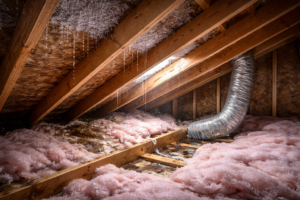
Sometimes that’s true. But often the real culprit is condensation—moisture forming inside your attic or roof system because warm, humid air is meeting cold surfaces. The tricky part? Roof leaks and condensation can look almost identical, especially when you’re seeing symptoms inside the house.
Misdiagnosing the source can cost you. If you treat condensation like a roof leak, you might replace shingles that weren’t the problem. If you treat a roof leak like condensation, you could allow water intrusion to spread into decking, insulation, and framing.
This guide will help you figure out what’s happening—step-by-step—using real-world signs homeowners can check. You’ll also learn how attic ventilation affects both problems, why bath fan discharge issues cause “mystery leaks,” and what seasonal patterns reveal.
✅ Not sure if it’s a leak or condensation? Schedule a roof and attic evaluation with Reimagine Roofing to pinpoint the cause and stop the damage fast.
Why Roof Leaks And Condensation Get Confused
Both issues can produce:
- Water stains on ceilings or walls
- Damp insulation
- Musty odors
- Wet wood in the attic
- Dripping water during certain weather
But the source is different.
Roof Leak (Water Intrusion)
A roof leak happens when rain or melting snow enters from outside through:
- Missing or damaged shingles
- Failed flashing (chimneys, vents, skylights, wall intersections)
- Damaged underlayment
- Cracked vent boots
- Nail pops
- Ice dams
- Wind-driven rain forcing water under materials
Condensation (Moisture From Inside Your Home)
Condensation happens when warm, moist indoor air rises into the attic and meets cold surfaces like:
- Roof decking
- Nails and fasteners
- HVAC ducts
- Metal vents
- Skylight frames
Then water forms, drips, and mimics a leak.
The First Question: When Does The Moisture Show Up?
Timing is one of the biggest clues.
Signs It’s More Likely A Roof Leak
- Staining or dripping during or right after rain
- Moisture appears during wind-driven storms
- Wet spots worsen after snow melt (cold climates)
- Symptoms appear in multiple seasons, not just winter
- Drips occur even when indoor humidity is low
Signs It’s More Likely Condensation
- Moisture appears during cold snaps or winter nights
- Dripping happens when it’s cold outside but not raining
- Wetness is worse in the morning, then dries later
- Moisture appears after showers, cooking, laundry
- Musty attic smell shows up in winter or humid months
- Frost forms in the attic (cold climates), then melts later
Seasonal Tip: Condensation problems often spike in winter because the attic is cold and indoor air is warm and humid. Roof leak problems spike during storms and heavy precipitation events.
Quick Homeowner Checklist: Leak Or Condensation?
Before you climb into the attic, start with these quick checks.
If You See Water Stains On The Ceiling
Ask:
- Did this stain grow after rain?
- Did it grow after a cold snap with no rain?
- Is the stain near a bathroom, laundry room, or kitchen?
- Is the stain below an attic vent pipe, chimney, or skylight?
If You Notice Dripping
Ask:
- Is it dripping during showers or after using exhaust fans?
- Is it dripping only when it’s cold outside?
- Is it dripping during windy rain?
Then move to attic inspection.
Step-By-Step Attic Inspection: What To Look For
If it’s safe to access your attic, you can collect clues quickly. Bring:
- A bright flashlight or headlamp
- A phone camera
- A towel or paper towels
- A moisture meter if you have one (optional)
- A mask if you suspect mold
Step 1: Find The Wettest Area
Start above the interior symptom (stain or drip). Then expand your search.
Important: Water can travel along rafters, trusses, or drywall before showing up. The “wet spot” may not be directly under the source.
Step 2: Check The Roof Decking And Nails
Look for:
- Dark staining on decking
- Wet nail tips
- Frost on nails in winter
- A “speckled” pattern of moisture across wide areas
How it helps:
- Leak: Usually creates a more localized wet path—a streak, a concentrated stain, or a defined drip line.
- Condensation: Often shows widespread dampness, especially on nails and metal components, sometimes across large attic sections.
Step 3: Inspect Insulation Condition
Look for:
- Compressed or matted insulation
- Damp patches
- Darkened areas
- Moldy smell
Leak pattern: One area saturated, often close to a roof penetration or valley line.
Condensation pattern: Dampness may be more diffuse, especially near eaves if ventilation is poor.
Step 4: Look At Penetrations And Flashing Points From Inside
Focus on common leak zones:
- Plumbing vent pipes
- Bath fan vents
- Furnace/flue vents
- Skylight shafts
- Chimney area
- Valleys (if visible)
- Roof-to-wall intersections
A lot of confirmed roof leaks start here.
The Biggest Condensation Cause Homeowners Miss: Bath Fan Discharge Issues
One of the most common reasons people “have a roof leak” is actually this:
Bathroom exhaust fans dumping warm, humid air into the attic.
That moisture then condenses on cold surfaces, causing:
- Wet decking
- Mold growth
- Rusted nails
- Dripping that looks like a roof leak
- Insulation saturation
- Smells in bathrooms and upstairs bedrooms
Common Bath Fan Discharge Problems
- The duct ends in the attic (not vented outside)
- The duct is disconnected from the roof cap or wall vent
- The duct is crushed, kinked, or too long
- The duct is uninsulated, causing moisture to condense inside the duct
- The fan is too weak or dirty, so it doesn’t move enough air
- A roof cap vent has a damper stuck shut
Signs Your Bath Fan Is Causing Condensation
- Moisture above bathrooms specifically
- Mold on roof decking near the bathroom fan duct
- Frost or water droplets on the duct in winter
- Bathroom mirrors stay fogged long after a shower
- Musty smell upstairs during cold weather
Easy Home Test For Bath Fan Performance
Turn on the bath fan and hold a single sheet of toilet paper up to the grille.
- If it sticks strongly, airflow is decent.
- If it barely holds or falls, the fan may be underperforming or the ducting is restricted.
Note: Even a strong fan can still cause attic moisture if it vents into the attic or has duct leaks.
If moisture is showing up near bathrooms or you suspect improper venting, book an attic ventilation and moisture inspection with Reimagine Roofing. We’ll trace the duct path and confirm whether it’s exhausting outside correctly.
Attic Ventilation: How It Affects Both Leaks And Condensation
Attic ventilation is often misunderstood. It doesn’t stop roof leaks—but it can reduce the conditions that make condensation worse and help your roof system last longer.
What Proper Attic Ventilation Does
- Removes warm, moist air before it condenses
- Helps regulate attic temperature
- Reduces moisture buildup in insulation and decking
- Helps prevent mold and wood rot
- Lowers risk of ice dams (cold climates)
- Reduces heat stress on roofing materials in hot climates
The Two Parts Of Ventilation: Intake And Exhaust
For airflow to work, you need both:
- Intake vents (usually soffit vents at the eaves)
- Exhaust vents (ridge vents, box vents, gable vents, or powered vents)
If you have exhaust without intake, the attic can pull air from inside the home through gaps—bringing moisture with it.
Signs Of Poor Attic Ventilation
- Mold growth on decking
- Frost in winter
- Musty smells
- Overheated attic in summer
- Insulation that looks damp or compacted
- Rust on nails or metal connectors
- “Rain” in the attic during cold mornings
Why Ventilation Can Mimic A Leak
In winter, warm indoor air leaks into the attic. If ventilation is insufficient, humidity builds and condenses on cold surfaces. It can literally drip like rainfall from nails and decking—especially overnight.
Seasonal Signs: What The Weather Pattern Can Tell You
Seasonal timing is one of the most reliable ways to separate leaks from condensation.
Winter: Condensation Peaks
In winter, the attic is cold. Warm indoor air carries moisture. When it escapes upward:
- Condensation forms on nails and decking
- Frost can appear, then melt later
- Drips may happen even on clear days
Winter condensation clue: Drips occur after a cold night, even with no precipitation.
Spring/Fall: Mixed Signals
Spring and fall bring humidity swings and storms. You may see:
- Condensation on cool mornings
- Leak symptoms during storms
- Moisture from poor ventilation plus rain events
This is when diagnosis matters most.
Summer: Roof Leaks More Obvious, But Condensation Still Happens
In hot-humid climates, condensation can happen when:
- Cold AC ducts sweat in the attic
- HVAC systems create cold surfaces
- High humidity infiltrates poorly sealed attics
- Bathroom and kitchen moisture builds up
In dry-hot climates, condensation is less common—but bathroom venting into attics can still create localized moisture problems.
Condensation Hotspots That Look Like Roof Leaks
Here are the most common “fake roof leak” zones:
1) Around Bathroom Fan Ducts
Warm steam hits cold attic air → water forms.
2) On HVAC Ductwork
Cold ducts in warm/humid attic air → condensation drips down.
3) Near Attic Hatches And Pull-Down Stairs
Warm air escapes through an unsealed attic access.
4) Above Kitchens And Laundry Rooms
Cooking steam and dryer moisture can move upward if ventilation is inadequate.
5) Around Recessed Lights
Older recessed lights (non-IC rated) can leak air into the attic.
Roof Leak Hotspots Homeowners Should Always Check
If it is a roof leak, it’s often one of these:
1) Plumbing Vent Boots
Rubber cracks over time and lets water in.
2) Chimney Flashing
Step flashing/counterflashing issues cause repeat leaks.
3) Skylights
Failed seals, flashing, or improper installation.
4) Roof Valleys
High water volume area—small failures show big symptoms.
5) Roof-To-Wall Intersections
Especially behind siding or near dormers.
6) Nail Pops And Exposed Fasteners
Small penetrations become entry points.
7) Missing/Damaged Shingles
Wind damage can break the water-shedding system.
How To Tell The Difference By Moisture Pattern
This is one of the most helpful ways to diagnose:
Leak Pattern
- A trail or line of staining
- Concentrated wet area
- One point dripping
- Wetness aligns with a penetration or roof feature
- Worsens during storms
- May include debris washed into attic areas
Condensation Pattern
- Widespread dampness
- Moist nail tips across many rafters
- Frost pattern in winter
- Wetness on metal surfaces and ducting
- Drips that happen on cold mornings
- Often strongest near bathrooms, kitchens, or HVAC runs
What Homeowners Should Do Right Away (Without Making It Worse)
If you’re seeing moisture, do these steps:
1) Document Everything
Take photos of:
- Interior stains
- Attic wet spots
- Wet insulation
- Any duct or vent issues
- Exterior roof areas if visible from the ground
2) Reduce Moisture Sources Indoors
- Run bath fans during and 20 minutes after showers
- Use kitchen hood vent when cooking
- Avoid drying clothes indoors
- Keep indoor humidity in a safe range
3) Don’t Just Caulk Randomly
Caulk can hide symptoms without solving causes—and may complicate professional diagnosis.
4) Protect The Interior
Use a bucket or towel to protect ceilings and flooring.
5) Get A Professional Diagnosis If It’s Unclear
Because the fixes are different, a proper evaluation can save money.
How Reimagine Roofing & Construction Diagnoses Leak Vs Condensation
A reliable diagnosis looks at the whole system:
- Roofing materials and roof penetrations
- Flashing details and known failure points
- Attic ventilation balance (intake + exhaust)
- Signs of air leakage from living space into attic
- Bath fan discharge routing and duct condition
- Moisture patterns on decking and insulation
We focus on identifying the root cause, not selling the biggest project.
✅ If you’re seeing moisture and you’re not sure why, book a roof and attic moisture inspection with Reimagine Roofing. We’ll determine whether you’re dealing with a roof leak, condensation, or both—and recommend the most cost-effective fix.
FAQ: Common Questions Homeowners Ask
Can condensation really cause ceiling stains?
Yes. Condensation can drip onto insulation and drywall, creating stains that look exactly like roof leaks.
Why is it only happening in winter?
Cold attic surfaces + warm humid indoor air = condensation. Winter creates the biggest temperature difference.
If my bath fan vents into the attic, is that a big deal?
Yes. It can cause mold, rot, and major moisture damage over time—plus it won’t remove humidity from the bathroom effectively.
Can a roof leak and condensation happen at the same time?
Yes. A small leak can add moisture, and poor ventilation can make it worse. That’s why full-system evaluation matters.
Do I need more attic vents to solve moisture?
Not always. Sometimes the biggest fix is air sealing (stopping warm humid air from leaking into the attic) and correcting exhaust ducting. Ventilation should be balanced and properly designed.
Ready To Stop The Guessing?
Moisture issues are time-sensitive. The sooner you identify the source, the easier it is to prevent mold, rot, and expensive repairs.
✅ Schedule your roof and attic evaluation with Reimagine Roofing to confirm whether the problem is a roof leak or condensation—and get a clear plan to fix it the right way.
Popular Posts