Should You Get Gridless or Gridded Windows?
Should You Get Gridless or Gridded Windows?
Gridless Windows vs. Gridded: Curb Appeal vs. Cleaning vs. Cost
When homeowners shop for replacement windows, they usually focus on energy efficiency, frame material, and price. But one design choice quietly has a huge impact on curb appeal, maintenance, and cost: gridless vs. gridded windows.
Window grids—also called muntins or grilles—can dramatically change how your home looks from the street and how much time you spend cleaning your windows. They also affect pricing more than many homeowners realize.
So which is better for your home: clean, modern gridless windows or classic, traditional gridded windows?
This in-depth guide compares gridless vs. gridded windows across the three things homeowners care about most:
- Curb appeal
- Cleaning and maintenance
- Cost and long-term value
By the end, you’ll know exactly which option fits your home’s style, budget, and lifestyle—and if you want a professional recommendation, Reimagine Construction offers free window consultations and fast quotes to help you decide with confidence.
✅ Schedule your free window consultation with Reimagine Construction today
What Are Gridless and Gridded Windows?
Before comparing pros and cons, let’s clarify the terms.
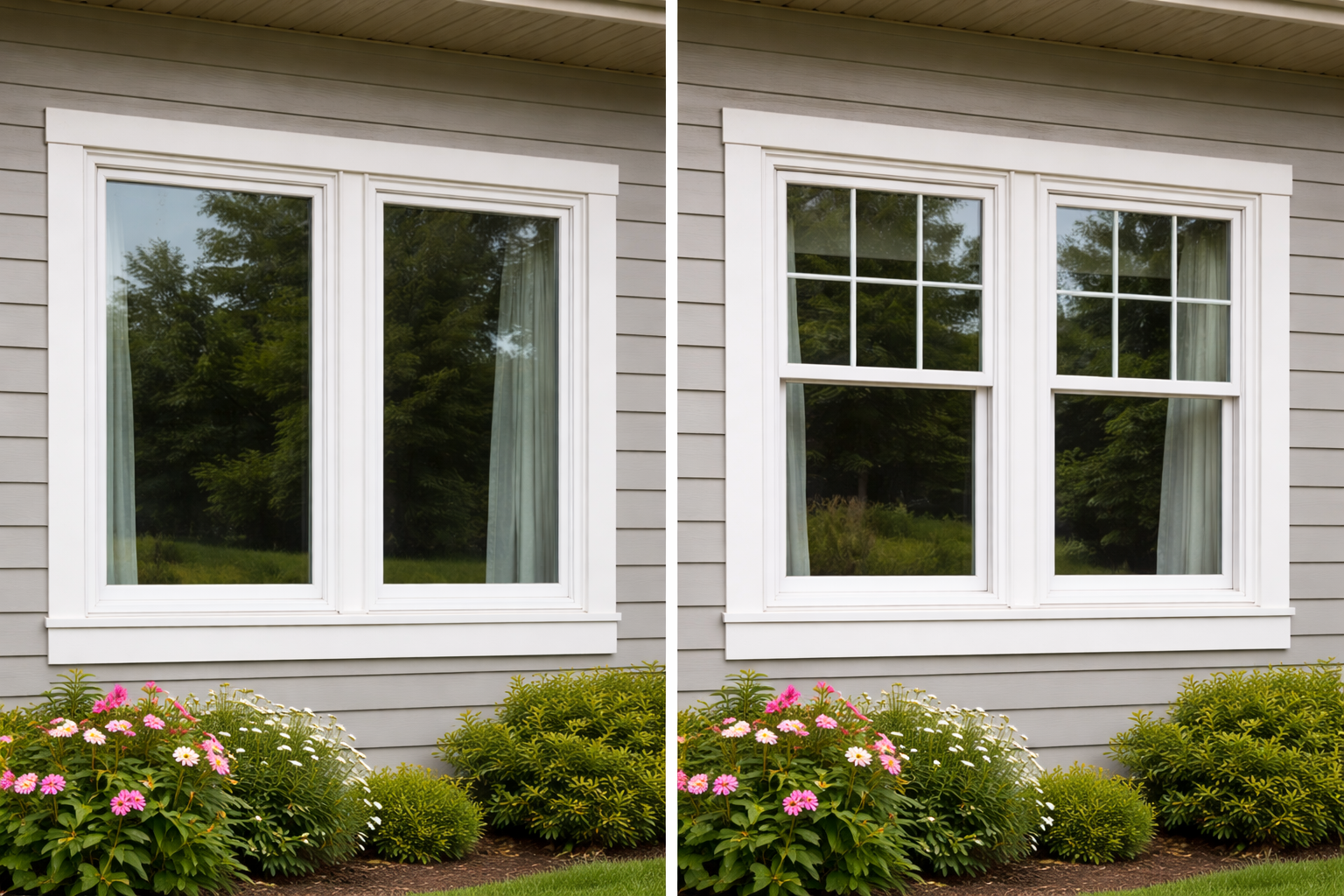
Gridless Windows
Gridless windows are exactly what they sound like:
- One uninterrupted pane of glass
- No interior or exterior grid lines
- Clean, open appearance
They emphasize:
- modern design
- maximum glass area
- unobstructed views
Gridded Windows
Gridded windows feature dividing lines, also known as window grilles, that break the glass into sections. Historically, window grilles were essential because they held together multiple glass panes in a window. These lines may be:
- True divided light or authentic divided lites (separate individual panes or individual glass panes—rare and expensive), where each section is a separate piece of glass held by muntins for historical accuracy.
- Simulated divided lites (SDL) (grids applied to the glass surface), which add an upscale look to windows by simulating several single panes of glass set into the grids and can increase the appeal of a house by adding visual interest.
- Internal grids (grids sealed between the panes), also known as Grilles Between Glass (GBG), which are color-matched grids installed between the glass panes, making them an attractive, easy-to-clean option. Grilles Between Glass (GBGs) allow for easier window cleaning with no bars on the exterior or interior surface of the glass.
Gridded windows emphasize:
- traditional or classic styling (grilles are often considered a more traditional design element)
- architectural detail (grille patterns are often used to preserve the historic aspects of a home’s style and maintain a consistent look)
- symmetry (traditional home styles emphasize window symmetry, and window grilles often take on traditional styles to maintain a balanced look; for example, Colonial-style grids are usually divided into equal sections and are commonly in sets of 4, 6, or 9)
One Design Choice That Changes Everything
Window grids don’t affect just one thing—they influence:
- how big your windows look
- how bright your rooms feel
- how often you clean
- how much you pay per window
- how buyers perceive your home
This is why grid style is more than a cosmetic decision—it’s a lifestyle and value choice.
Curb Appeal: Gridless vs. Gridded Windows
Gridded windows and curb appeal
Gridded windows, often featuring traditional grilles, are closely associated with:
- colonial homes
- farmhouse styles
- craftsman architecture
- traditional neighborhoods
- historic designs
Traditional grilles contribute to a traditional aesthetic and traditional style, helping to achieve a more traditional look and a balanced look in these home styles. These classic, symmetrical grille patterns are essential for complementing specific architectural styles and maintaining the timeless appearance of certain architectural styles.
They add:
- visual structure
- character
- symmetry
- a sense of tradition
For certain homes and architectural styles, removing grids can make the exterior feel unfinished or out of place. Grilles are not outdated; they are essential for certain types of architecture, especially when trying to match the historical accuracy of the home’s architectural style. Window grids can maintain architectural integrity and historical authenticity for period homes, and are often required to meet requirements set by historical preservation societies to ensure the design matches the original intent of historic home styles.
Gridless Windows and Curb Appeal
Gridless windows shine in:
- modern homes
- contemporary designs
- mid-century architecture
- coastal homes
- minimalist exteriors
They offer:
- a clean, high-end look
- larger-looking windows
- more emphasis on exterior materials (siding, stone, stucco)
On many updated homes, gridless windows can instantly make the exterior feel newer and more expensive.
The Curb Appeal Rule of Thumb
- Traditional architecture → gridded windows
- Modern or transitional architecture → gridless windows
But there’s nuance—which we’ll cover later.
Interior Aesthetics and Natural Light
Gridless windows inside the home
From the interior, gridless windows:
- maximize visible glass
- let in more perceived light
- create cleaner sightlines
- feel more open and modern
Even though grids don’t technically block much light, they visually interrupt it, which matters in smaller rooms.
Gridded Windows Inside the Home
Grids can:
- add charm and detail
- frame outdoor views
- complement traditional interiors
However, in some homes they:
- make rooms feel busier
- visually shrink the window
- compete with modern décor
Interior Design Takeaway
If your interior style is:
- modern
- transitional
- minimalist
- open-concept
Gridless windows usually feel better inside
If your interior style is:
- classic
- farmhouse
- traditional
- cottage-inspired
Grids can enhance the look
Cleaning and Maintenance: The Honest Comparison
This is where many homeowners change their mind.
Cleaning Gridless Windows
Gridless windows are:
- faster to clean
- easier to wipe
- simpler for both interior and exterior
There are:
- no corners for dust to collect
- no lines to clean around
- fewer streaks
If you value low maintenance, gridless windows win—no contest.
Cleaning Gridded Windows
Cleaning gridded windows depends on grid type:
Internal Grids (Between the Panes)
- easiest gridded option to clean
- glass surface remains smooth
- no physical grid to wipe around
Simulated Divided Lites (SDL)
- grids are mounted on the glass surface
- more time-consuming to clean
- dirt collects around grid edges
True Divided Lites
- most difficult to clean
- multiple panes, multiple edges
- rarely used today due to cost
Cleaning Reality Check
Homeowners often say:
“I loved the look of grids… until I had to clean them.”
If you:
- clean your own windows
- have large window areas
- live in a dusty or pollen-heavy area
Gridless windows save significant time over the years
Cost Comparison: Gridless vs. Gridded Windows
Are Gridded Windows More Expensive?
Yes—almost always.
Grid options increase cost due to:
- Additional materials
- Added manufacturing steps
- More complex installation
- Upgraded aesthetics
Typical Cost Differences
While pricing varies by brand and window size:
- Gridless windows are the baseline price
- Gridded windows can add 5–20% per window
- True divided lites can add significantly more
Over a full home replacement, grids can add thousands of dollars.
Long-term Cost Considerations
Gridded windows may also:
- take longer to clean (time cost)
- require more detailed maintenance
- limit future design flexibility if tastes change
Energy Efficiency and Performance Differences
Here’s some good news:
Grids don’t usually hurt energy efficiency—if chosen correctly.
Internal Grids
- sealed inside the glass
- no effect on air leakage
- no impact on insulation performance
Exterior Grids
- minimal efficiency impact when properly installed
- slightly more surface area exposed
Simulated divided light grilles are an energy-efficient window option available on specific product lines. They closely mimic the appearance of true divided-light windows and are permanently bonded to the interior and exterior of the window glass without spacers.
The biggest energy factors remain:
- glass type (Low-E, double/triple pane)
- frame material
- installation quality
Grid choice affects looks and maintenance more than performance.
What Works Best for Each Home Style
Best Styles for Gridded Windows
- Colonial
- Georgian
- Farmhouse
- Craftsman
- Cottage
- Historic homes
Best Styles for Gridless Windows
- Modern
- Contemporary
- Mid-century modern
- Coastal
- Ranch (often looks cleaner updated)
Neighborhood Matters Too
Even if you love gridless windows, consider:
- HOA guidelines
- Neighborhood consistency
- Resale expectations
In some neighborhoods, removing grids can stand out—for better or worse.
Popular Grid Patterns (If You Choose Grids)
If you go gridded, pattern choice matters.
Common grid styles
There are different types of grid patterns and grille styles available for windows, each offering unique decorative and architectural appeal. Homeowners can select the grid pattern or grille pattern that best fits their desired look and complements their home’s style.
- Colonial (6-over-6 or 9-over-9) – This traditional grille style features a grid pattern divided into equal sections, commonly in sets of 4, 6, or 9. For example, a “6-over-6” window has six lights or panes in both the upper and lower sash, which should be specified for clear communication.
- Prairie style – This grille pattern is divided into unequal panes, with a larger square or rectangle in the center and smaller squares in the corners. The Prairie pattern divides the window into unequal sections, showcasing an abstract, asymmetrical style with straight, simple lines.
- Top-only grids – Grids are present only on the upper sash, leaving the bottom sash gridless for a more open view.
- Custom patterns – Grille styles can be tailored to the architecture, allowing for unique grid patterns that enhance the desired aesthetic of the home.
Best of Both Worlds: Top-only Grids
One of the most popular modern compromises:
- classic look from the street
- cleaner view through lower glass
- easier interior cleaning
This option works especially well on:
- double hung window styles, where grilles on the upper sash can replicate traditional aesthetics
- farmhouse and transitional homes
Mixed Designs: When Gridless + Gridded Is the Smartest Choice
You don’t have to choose just one style.
Common Mixed Strategies
- Grids on front-facing windows only
- Gridless windows on sides and back
- Grids on upper floors, gridless below
- Decorative grids in formal rooms only
This approach:
- preserves curb appeal
- reduces overall cost
- minimizes cleaning effort
- keeps interiors feeling open
Many homeowners are happiest with a strategic mix.
Resale Value and Buyer Perception
What Buyers Tend To Prefer
- Traditional homes → expect grids
- Modern homes → expect gridless
- Updated homes → prefer consistency
Buyers may see mismatched grid styles as:
- poorly planned
- DIY decisions
- a red flag (even if performance is great)
Resale Rule
Choose a style that:
- fits your home’s architecture
- aligns with neighborhood norms
- looks intentional, not trendy
Common Myths About Window Grids
- Myth: Grids reduce energy efficiency
- Truth: Modern grid systems don’t meaningfully impact efficiency
- Myth: Gridless windows look cheap
- Truth: Gridless windows often look more premium on modern homes
- Myth: Grids always improve resale value
- Truth: Only when they fit the home’s style
- Myth: You can’t change your mind later
- Truth: Some grid systems are removable—but not all
Final Decision Guide: Which Should You Choose?
Choose gridless windows if:
- you want a clean, modern look
- you value easy cleaning
- you want maximum glass and light
- your home style is contemporary or transitional
Go for gridded windows if:
- your home is traditional or historic
- curb appeal detail matters most
- you’re okay with extra cleaning
- neighborhood style expectations favor grids
Get a mixed approach if:
- you want the best balance of looks and maintenance
- you want to control costs
- you want flexibility
Get Expert Guidance With Reimagine Construction
Choosing between gridless and gridded windows isn’t just about taste—it’s about matching design, maintenance, and value to your home.
Reimagine Construction helps homeowners:
- compare grid options honestly
- visualize what works best for their home
- balance curb appeal with cleaning and cost
- receive fast, transparent window quotes
✅ Schedule your free window consultation with Reimagine Construction today
✅ Get a personalized recommendation + detailed estimate
✅ Upgrade your windows with confidence
Popular Posts